2026 Lawrence Peregrines: Week Five

May 16, 2026 in In the Nest Box

May 16, 2026: The past week in Lawrence, Massachusetts brought a mix of mild spring temperatures, scattered rain showers, and occasional brighter periods as the city’s resident peregrines settled into the busy transition from incubation to raising newly hatched chicks.

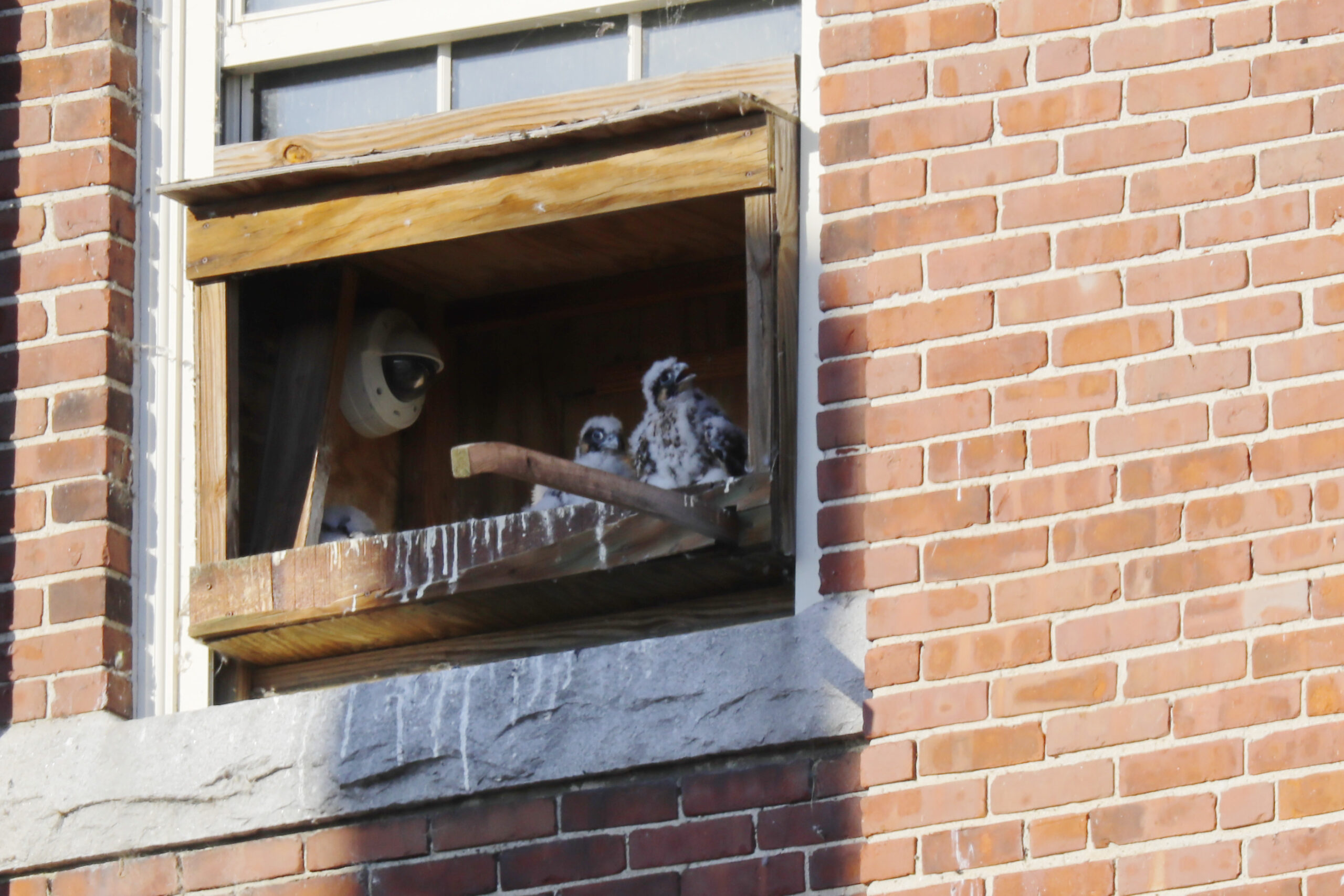
The first two eggs hatched overnight last Sunday morning, followed later in the day by a third hatchling, marking the successful beginning of the 2026 nesting season. A fourth egg remains in the nest box but is no longer expected to hatch. Since the arrival of the chicks, activity inside the nest box has increased dramatically. Both adults have remained highly attentive, with the female spending long stretches carefully brooding the hatchlings to keep them warm and protected, especially during cooler overnight periods and damp weather. The male has taken on an increasingly important role delivering prey regularly to the nest box, helping meet the rapidly growing nutritional demands of the young falcons.

The first week of life is a remarkable period of growth and development for peregrine hatchlings. Covered in soft white down and initially fragile and unsteady, the chicks grow noticeably stronger with each passing day. Their eyes begin opening more fully, neck strength improves, and feeding responses become more active and coordinated. At this stage, the female carefully tears prey into tiny pieces for feeding while continuing to shield the chicks beneath her body between meals. The nest box has now shifted from the quiet rhythm of incubation to the constant motion of brooding, feeding, preening, and protection that defines the early nestling stage.

2026 Lawrence Peregrines: Fourth Egg!

April 9, 2026 in In the Nest Box

April 9 under clear skies, wind S at 5MPH, temp at 27F: A major milestone for the Lawrence Peregrines, as the fourth egg was laid overnight on April 9, likely completing the full clutch for the 2026 breeding season. With four eggs now resting in the gravel-lined nest box, this pair has reached the typical upper range for peregrine falcons, setting the stage for what promises to be an exciting and closely watched season ahead.

With the clutch now complete, the focus shifts to full-time incubation. While some incubation behavior may have already begun, the female will now settle into a more consistent routine, carefully maintaining optimal warmth and positioning for all four eggs. The male will assist by providing food and occasionally relieving her for short periods.

Looking ahead, the timeline is right on track. Peregrine eggs typically hatch after 29–33 days of incubation, which places expected hatching sometime in early to mid-May. From that moment, the pace of activity will accelerate quickly, from fragile hatchlings to rapidly growing nestlings, all unfolding within the nest box and seen through the New Balance webcam.

For now, this is a moment to pause and appreciate, a complete clutch, a healthy pair, and the quiet, focused beginning of the next chapter in the peregrines’ breeding cycle!!

2026 Lawrence Peregrines: Second Egg!

April 4, 2026 in In the Nest Box

April 4, 2026: with a few clouds, wind N at 13MPH with gusts over 20MPH, temp 54F

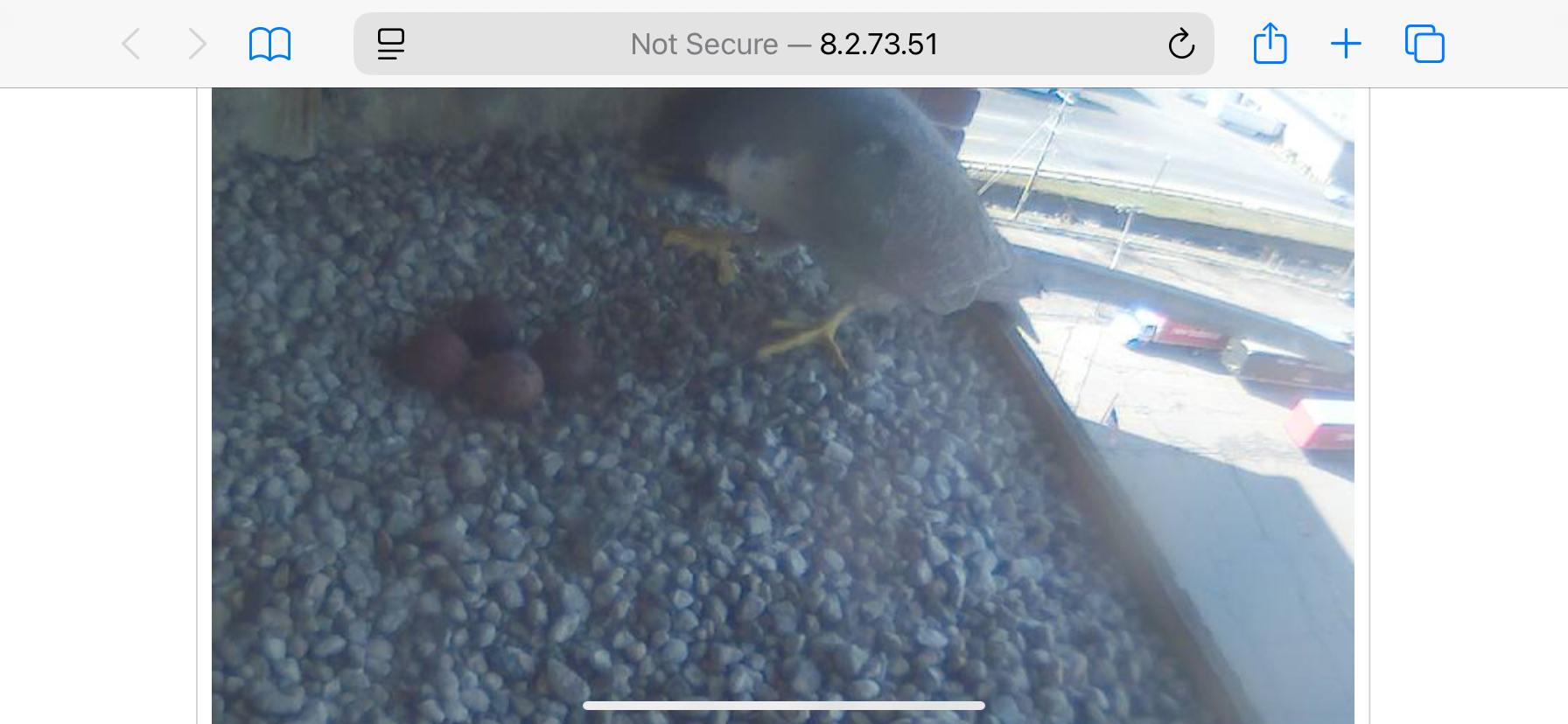
Great news from the Lawrence Peregrines nest box as the second egg has been laid. In this webcam image, two rich, reddish-brown eggs rest in the gravel-lined scrape, a classic sign that the 2026 breeding season is unfolding exactly as expected. Peregrine falcons typically lay eggs about 48 hours apart, and with the first egg arriving overnight on April 2nd, this second egg confirms the pair is right on schedule.

Clutch size for peregrines is usually 3–4 eggs, so there’s a strong chance we may see one or two more in the coming days. Interestingly, full incubation often doesn’t begin until the second-to-last egg is laid, helping ensure that the chicks hatch closer together in time.

At the moment this photo was captured, the female can be seen standing watch from the lateral perch just outside the nest box. As always, she is alert, composed, and fully in command of her surroundings. It’s a classic posture, guarding the nest while allowing the clutch to develop. From here, we’ll be closely following each step with additional eggs, the onset of steady incubation, and eventually the exciting transition to hatching in just over 30 days, and then onto nestling growth.

A perfect start to what promises to be another remarkable season!