2026 Lawrence Peregrines: Week Six

May 22, 2026 in In the Nest Box

From May 16–22, weather conditions in Lawrence, Massachusetts remained cool and unsettled at times, with a mix of cloudy days, scattered rain showers, and occasional breaks of sunshine. Temperatures generally ranged from the upper 50s into the upper 60s during the day, while overnight conditions remained cooler and damp—typical for mid-May in northeastern Massachusetts.

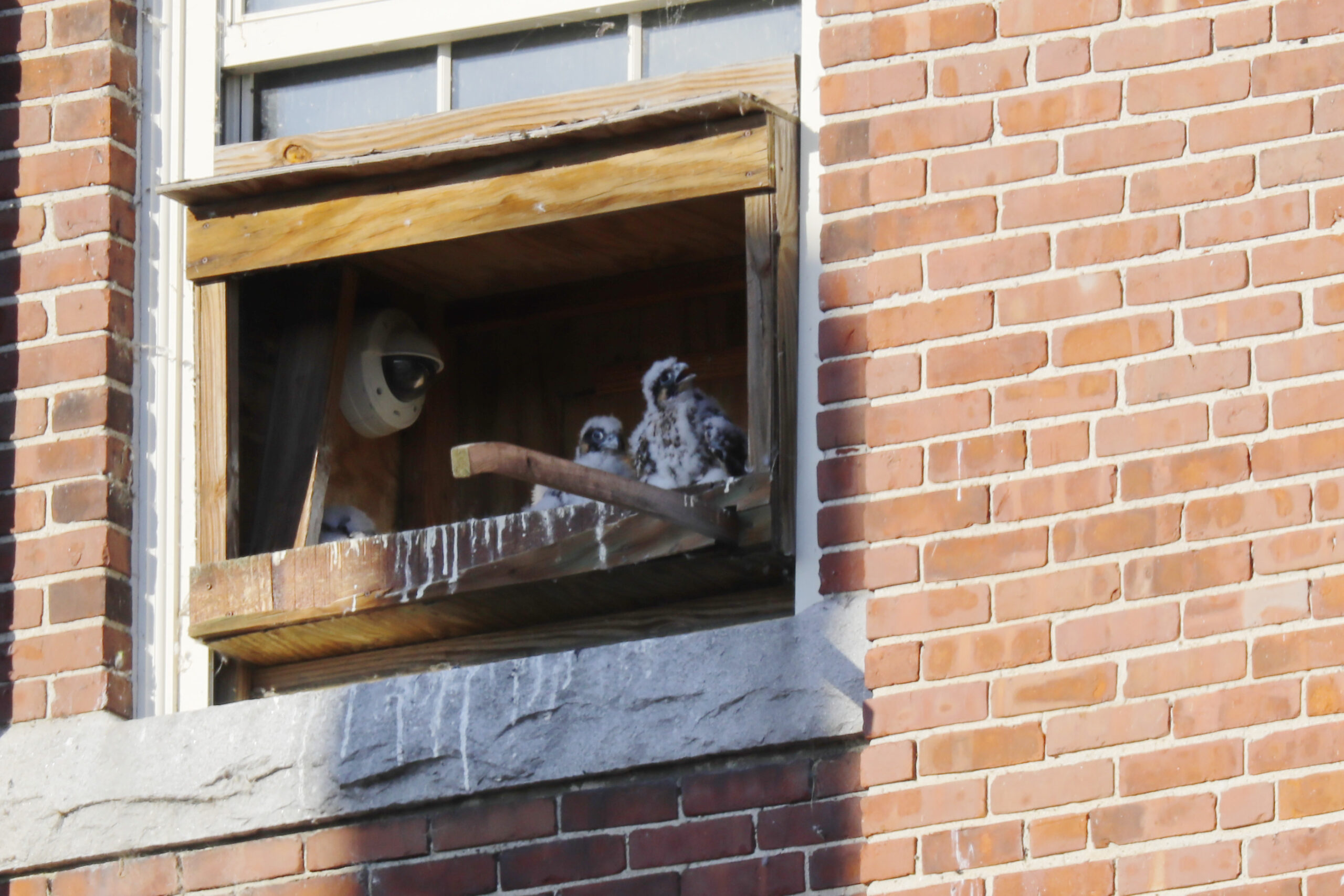
Inside the nest box, the three young peregrines entered their second week of life and showed rapid daily growth. No longer fragile hatchlings, the chicks are now firmly in the nestling stage, becoming noticeably larger, stronger, and more active with each passing day. Their eyes are fully open, neck strength has improved considerably, and feeding responses are much more vigorous and coordinated. The soft white down covering their bodies remains prominent, though the earliest signs of emerging feather development are beginning beneath the skin. Both adults have remained extremely attentive, with the female still brooding the chicks frequently during cooler periods while the male continues regular prey deliveries to support the growing demands of the nestlings.

The fourth egg remains in the nest box and is no longer expected to hatch. While disappointing, this is not unusual in peregrine falcon nesting attempts and has occurred in this Lawrence nest box during prior seasons. Infertile eggs or eggs in which development stops naturally can occur even in experienced and otherwise successful pairs. The adults have now fully shifted their attention toward raising the three healthy nestlings, and activity inside the nest box continues to increase as feeding frequency, chick movement, and overall development accelerate with each passing day.

2026 Lawrence Peregrines: Week Five

May 16, 2026 in In the Nest Box

May 16, 2026: The past week in Lawrence, Massachusetts brought a mix of mild spring temperatures, scattered rain showers, and occasional brighter periods as the city’s resident peregrines settled into the busy transition from incubation to raising newly hatched chicks.

The first two eggs hatched overnight last Sunday morning, followed later in the day by a third hatchling, marking the successful beginning of the 2026 nesting season. A fourth egg remains in the nest box but is no longer expected to hatch. Since the arrival of the chicks, activity inside the nest box has increased dramatically. Both adults have remained highly attentive, with the female spending long stretches carefully brooding the hatchlings to keep them warm and protected, especially during cooler overnight periods and damp weather. The male has taken on an increasingly important role delivering prey regularly to the nest box, helping meet the rapidly growing nutritional demands of the young falcons.

The first week of life is a remarkable period of growth and development for peregrine hatchlings. Covered in soft white down and initially fragile and unsteady, the chicks grow noticeably stronger with each passing day. Their eyes begin opening more fully, neck strength improves, and feeding responses become more active and coordinated. At this stage, the female carefully tears prey into tiny pieces for feeding while continuing to shield the chicks beneath her body between meals. The nest box has now shifted from the quiet rhythm of incubation to the constant motion of brooding, feeding, preening, and protection that defines the early nestling stage.

2026 Lawrence Peregrines: Week Four

May 7, 2026 in In the Nest Box

During the fourth week, from May 1–7, weather conditions continued the gradual transition into a milder spring pattern, though the week included a mix of changing conditions typical for early May. Temperatures generally ranged from the upper 50s into the upper 60s, with a few cooler mornings and occasional breezy periods. The week featured intervals of sunshine mixed with cloud cover, along with scattered showers and damp conditions at times. Overall, the weather remained relatively moderate and stable, providing favorable conditions as the peregrines moved through the final stages of incubation and approached the expected hatching window for their four-egg clutch.


By the fourth week of incubation, the developing peregrine chicks are entering the final and most active stage before hatching. Inside the eggs, the chicks are now fully formed, covered with a fine layer of down, and occupying much of the available space within the shell. Their bones, muscles, eyes, beaks, and talons are well developed, and movement inside the eggs becomes more noticeable. As hatching approaches, the chicks begin positioning themselves for emergence, orienting toward the internal air cell that will support their first breaths. This is also the period when faint peeping sounds or subtle rocking of the eggs may occasionally occur shortly before pipping begins.

The adult peregrines become especially attentive during this final stretch. The female continues to perform the majority of incubation duties, remaining low and steady over the clutch for long periods, particularly during cool nights or wet weather common north of Boston in early May. The male remains highly involved, regularly delivering food and taking short turns on the eggs while the female feeds, stretches, and preens nearby. Exchanges between the pair are quick and coordinated, minimizing exposure of the eggs during these critical final days. With hatching now imminent, the pair’s focus shifts from simply maintaining warmth to preparing for the demanding transition from incubation to feeding and brooding newly hatched chicks!

2026 Lawrence Peregrines: Week Three

April 30, 2026 in In the Nest Box

During the third week, from April 23–30, weather conditions gradually shifted toward a more settled and milder spring pattern. After a stretch of cooler, cloudy weather earlier in the month, the period featured a mix of partly sunny to sunny days, lighter winds, and temperatures generally ranging from the upper 50s into the mid-60s, with a few warmer afternoon periods. Overnight lows remained cool, often dipping into the 30s and 40s, typical for late April north of Boston. Overall, the week provided relatively stable and favorable conditions as the peregrines continued steady full-time incubation of their four-egg clutch.

During the third week of incubation, development inside the eggs is well advanced. The embryos now resemble fully formed chicks, with distinct features such as a developed beak, talons, and feather tracts beginning to form beneath the skin. Growth is rapid, supported by an extensive network of blood vessels drawing nutrients from the yolk. The chicks are becoming more active within the egg, and subtle movements may occasionally be detected. This stage is critical, as the embryos prepare for the final phase leading to hatching, typically beginning around days 29–33.

Incubation behavior remains steady and purposeful. The female continues to handle the majority of brooding duties, maintaining consistent warmth and carefully turning the eggs to support proper development. The male remains an attentive partner by delivering food regularly and taking short incubation shifts, usually during daylight hours, allowing the female time to feed and maintain her condition. Exchanges between the pair are smooth and efficient, minimizing any exposure of the eggs to the cool spring air common north of Boston. As the end of incubation approaches, attentiveness often increases, setting the stage for the first signs of hatching in the days ahead.