2026 Lawrence Peregrines: Week One

April 16, 2026 in In the Nest Box

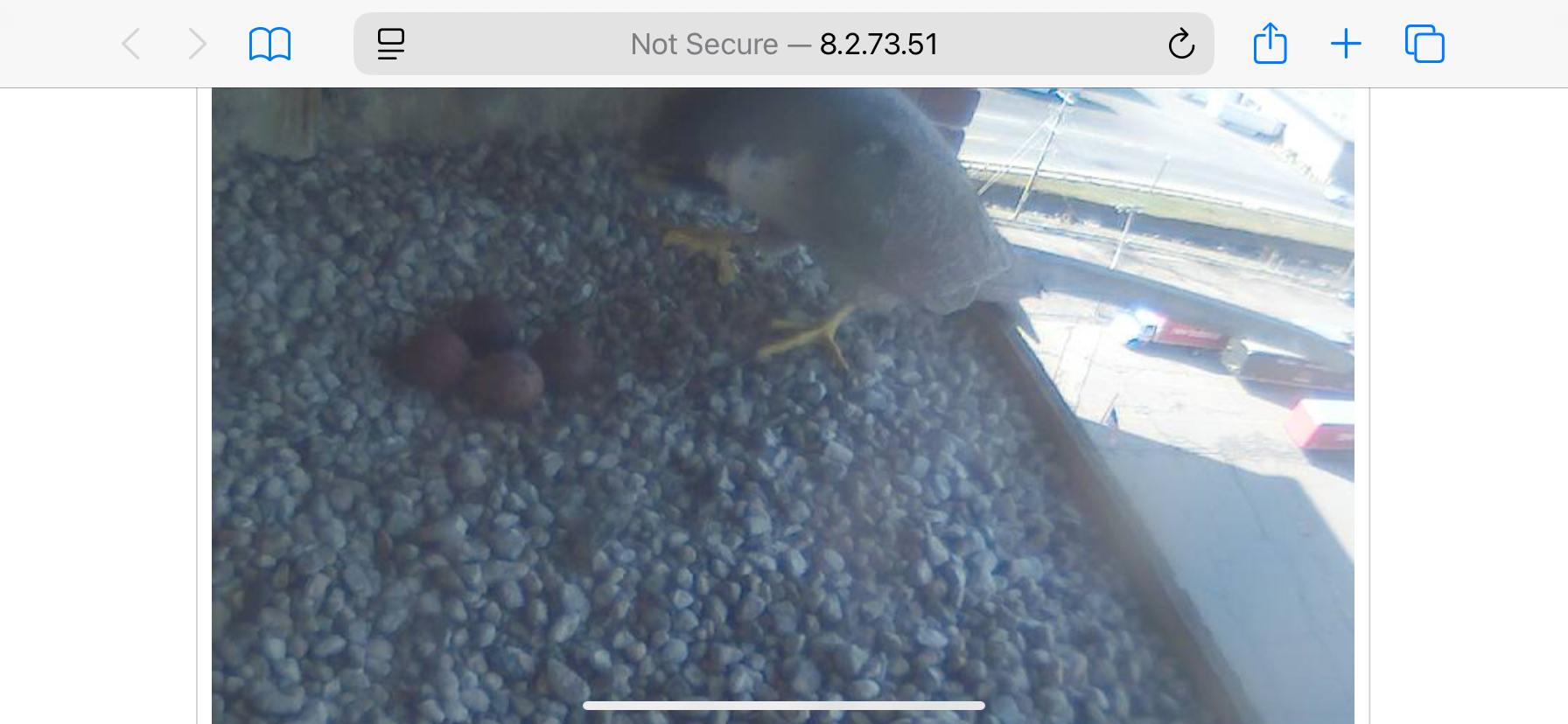
April 16, 2026: Over the past week, early spring has continued to make its presence felt with a mix of mild, seasonable temperatures and variable conditions. Daytime highs from the mid-40s to low 60s, with cooler mornings and occasional breezy periods. There have been a few stretches of cloud cover along with intermittent rain, typical of April’s transitional pattern, but also some brighter, calmer windows. Overall, the weather has been well within the normal range for this time of year, providing stable conditions as the peregrines settle into full-time incubation.

In the first week of incubation, the four eggs are in the earliest stages of development, with cell division underway and the embryo beginning to form along the yolk surface. From the outside, little appears to change, the eggs remain still and subtly colored, but inside, the foundations of the chicks are being established. Maintaining a steady temperature (around 99–100°F) is critical at this stage, especially in early spring conditions north of Boston, where cool air and shifting winds can quickly affect exposed eggs. The female settles low over the clutch, using her brood patch to transfer heat, while making small, regular adjustments to keep all eggs evenly warmed.

Incubation duties are shared, though the female does the majority of the work. She typically remains on the eggs for long, consistent stretches, especially overnight, while the male provides food and periodically takes short incubation shifts during the day. These exchanges are smooth and efficient, the arriving bird may vocalize softly before the sitting bird rises, carefully revealing the eggs before switching places. The male’s time on the eggs is usually brief, but important, allowing the female to stretch, feed, and maintain her own condition. This steady rhythm of care continues through the coming weeks, setting the stage for successful hatching about a month from now!

2026 Lawrence Peregrines: Fourth Egg!

April 9, 2026 in In the Nest Box

April 9 under clear skies, wind S at 5MPH, temp at 27F: A major milestone for the Lawrence Peregrines, as the fourth egg was laid overnight on April 9, likely completing the full clutch for the 2026 breeding season. With four eggs now resting in the gravel-lined nest box, this pair has reached the typical upper range for peregrine falcons, setting the stage for what promises to be an exciting and closely watched season ahead.

With the clutch now complete, the focus shifts to full-time incubation. While some incubation behavior may have already begun, the female will now settle into a more consistent routine, carefully maintaining optimal warmth and positioning for all four eggs. The male will assist by providing food and occasionally relieving her for short periods.

Looking ahead, the timeline is right on track. Peregrine eggs typically hatch after 29–33 days of incubation, which places expected hatching sometime in early to mid-May. From that moment, the pace of activity will accelerate quickly, from fragile hatchlings to rapidly growing nestlings, all unfolding within the nest box and seen through the New Balance webcam.

For now, this is a moment to pause and appreciate, a complete clutch, a healthy pair, and the quiet, focused beginning of the next chapter in the peregrines’ breeding cycle!!

2026 Lawrence Peregrines: Third Egg!

April 7, 2026 in In the Nest Box

April 7, 2026: partly cloudy, calm, temp 35F. Another exciting milestone at the Lawrence Peregrines nest box as the third egg has been laid. After just a few observations on Monday, April 6, did not see the third egg, but today…..yes, third egg has been laid. With eggs typically arriving about every 48 hours, this continues a perfectly timed sequence following the first egg on April 2nd. Three eggs now sit in the gravel scrape, bringing the pair very close to a full clutch.

For peregrine falcons, a clutch of 3–4 eggs is most common, so there’s a strong possibility we may see a fourth egg in the next two days. Notably, this stage often marks the transition toward more consistent incubation, as females usually begin full-time incubation around the second-to-last egg. That means we’re right on the cusp of the next important phase.

In this webcam image, the female had just landed on the lateral perch outside the box before hopping inside. She has an efficient, watchful routine that reflects both vigilance and commitment. With three eggs now in place, anticipation builds as we look ahead to full incubation, hatching, and the remarkable weeks of growth to follow!

2026 Lawrence Peregrines: Second Egg!

April 4, 2026 in In the Nest Box

April 4, 2026: with a few clouds, wind N at 13MPH with gusts over 20MPH, temp 54F

Great news from the Lawrence Peregrines nest box as the second egg has been laid. In this webcam image, two rich, reddish-brown eggs rest in the gravel-lined scrape, a classic sign that the 2026 breeding season is unfolding exactly as expected. Peregrine falcons typically lay eggs about 48 hours apart, and with the first egg arriving overnight on April 2nd, this second egg confirms the pair is right on schedule.

Clutch size for peregrines is usually 3–4 eggs, so there’s a strong chance we may see one or two more in the coming days. Interestingly, full incubation often doesn’t begin until the second-to-last egg is laid, helping ensure that the chicks hatch closer together in time.

At the moment this photo was captured, the female can be seen standing watch from the lateral perch just outside the nest box. As always, she is alert, composed, and fully in command of her surroundings. It’s a classic posture, guarding the nest while allowing the clutch to develop. From here, we’ll be closely following each step with additional eggs, the onset of steady incubation, and eventually the exciting transition to hatching in just over 30 days, and then onto nestling growth.

A perfect start to what promises to be another remarkable season!

2026 Lawrence Peregrines: First Egg!

April 2, 2026 in In the Nest Box

April 2, 2026: This image shows the familiar gravel-lined interior of the Lawrence Peregrines’ nest box, viewed from the New Balance webcam. Nestled slightly left of center sits a single, freshly laid peregrine egg, its rich reddish-brown coloration standing out clearly against the muted tones of the small, rounded stones. The scrape itself appears lightly formed, with subtle depressions in the gravel where the adults have begun shaping the nesting area.

Along the right edge of the frame, the urban backdrop comes into view, with loud trucks moving along Merrimack Street below, offering a striking contrast between the quiet, intimate beginning of a new annual life cycle and the constant motion of the city surrounding it. It’s a powerful reminder of a conservation success story as these peregrines continue to thrive in an urban environment.

This first egg is a strong and encouraging sign! With peregrines typically laying a clutch of 3–4 eggs, this moment marks the true beginning of the 2026 breeding season. From here, you’ll be able to follow the full arc of the nesting cycle with additional eggs over the coming days, the steady rhythm of incubation, the anticipation of hatching, and eventually the rapid growth and fledging of the young. A wonderful season ahead!