2026 Lawrence Peregrines: Fourth Egg!
April 9, 2026 in In the Nest Box
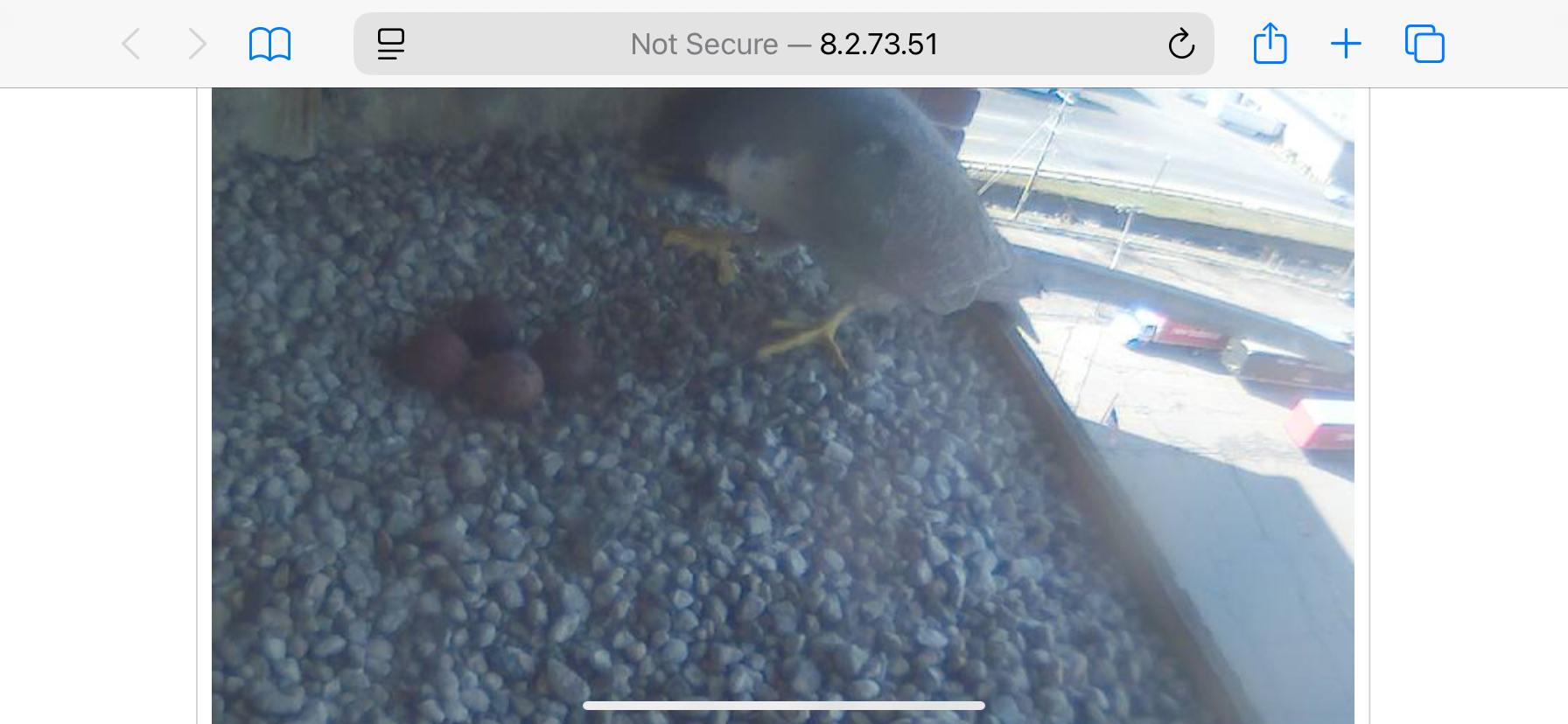
April 9 under clear skies, wind S at 5MPH, temp at 27F: A major milestone for the Lawrence Peregrines, as the fourth egg was laid overnight on April 9, likely completing the full clutch for the 2026 breeding season. With four eggs now resting in the gravel-lined nest box, this pair has reached the typical upper range for peregrine falcons, setting the stage for what promises to be an exciting and closely watched season ahead.
With the clutch now complete, the focus shifts to full-time incubation. While some incubation behavior may have already begun, the female will now settle into a more consistent routine, carefully maintaining optimal warmth and positioning for all four eggs. The male will assist by providing food and occasionally relieving her for short periods.
Looking ahead, the timeline is right on track. Peregrine eggs typically hatch after 29–33 days of incubation, which places expected hatching sometime in early to mid-May. From that moment, the pace of activity will accelerate quickly, from fragile hatchlings to rapidly growing nestlings, all unfolding within the nest box and seen through the New Balance webcam.
For now, this is a moment to pause and appreciate, a complete clutch, a healthy pair, and the quiet, focused beginning of the next chapter in the peregrines’ breeding cycle!!