2026 Lawrence Peregrines: Week Seven
June 12, 2026 in In the Nest Box, Near the Clock Tower
From June 5–12, weather conditions in Lawrence, Massachusetts were generally favorable for the growing peregrine family, with a mix of mild temperatures, increasing sunshine, and occasional periods of cloud cover and scattered showers. Daytime highs frequently reached into the 70s, while overnight temperatures remained comfortably cool. Overall, the week provided excellent conditions as the young falcons continued their rapid development during a critical stage of growth.
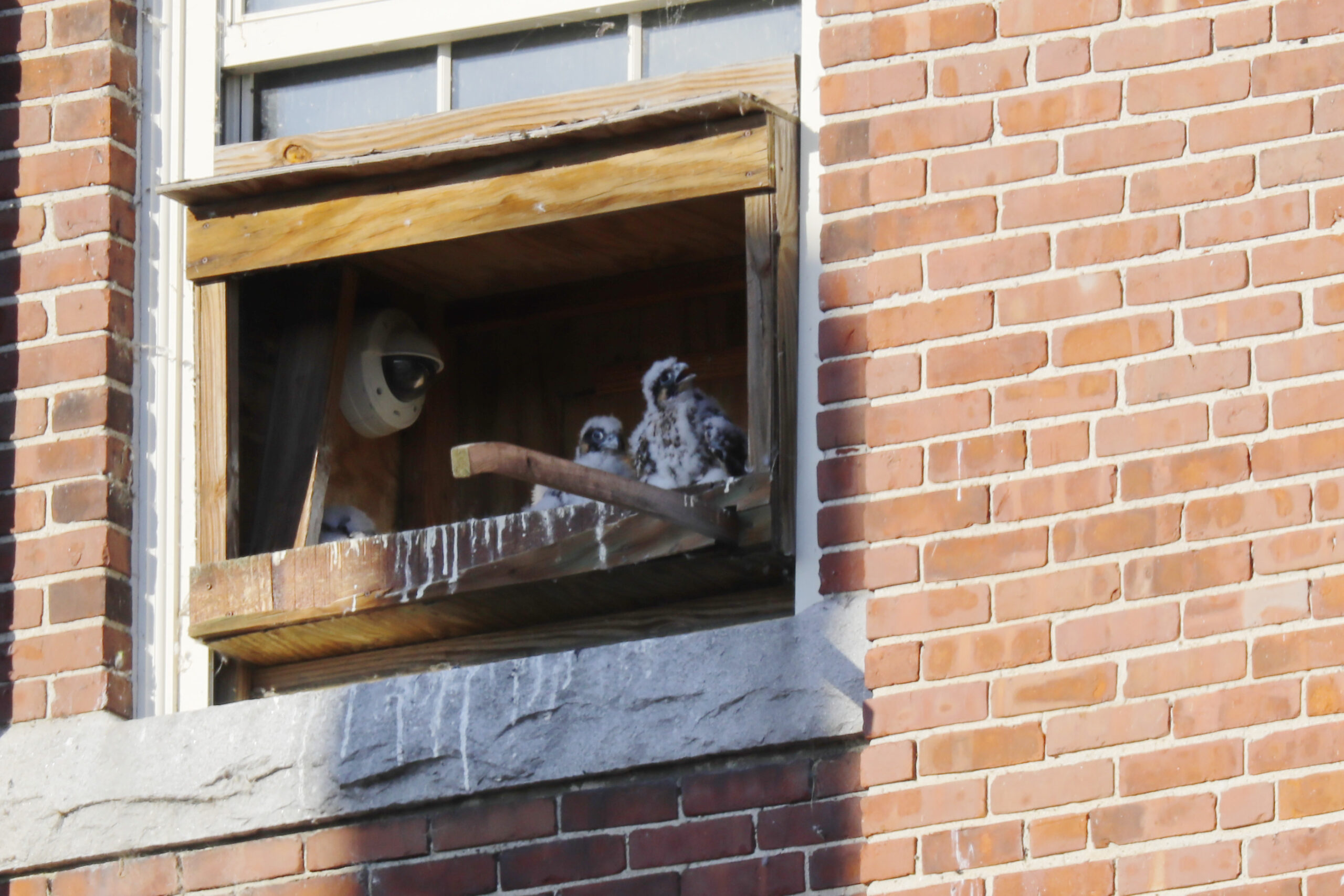
The three nestlings are now entering their fifth week of life and are beginning to look much more like young peregrine falcons than the down-covered hatchlings seen just a month ago. Much of their white down has been replaced by juvenile feathers, revealing the distinctive shape, posture, and coloration that will characterize them after fledging. Their wings have lengthened dramatically, flight feathers continue to emerge and grow, and periods of vigorous wing-flapping, stretching, hopping, and exploring around the nest box are becoming increasingly common. Feeding remains frequent, but the chicks are now capable of tearing at prey on their own, an important step toward independence. With fledging only a few weeks away, activity within the nest box is likely to become even more energetic as the young peregrines build strength, coordination, and confidence in preparation for their first flights over the Merrimack Valley.