2026 Lawrence Peregrines: Week Two

April 23, 2026 in In the Nest Box, Near the Clock Tower

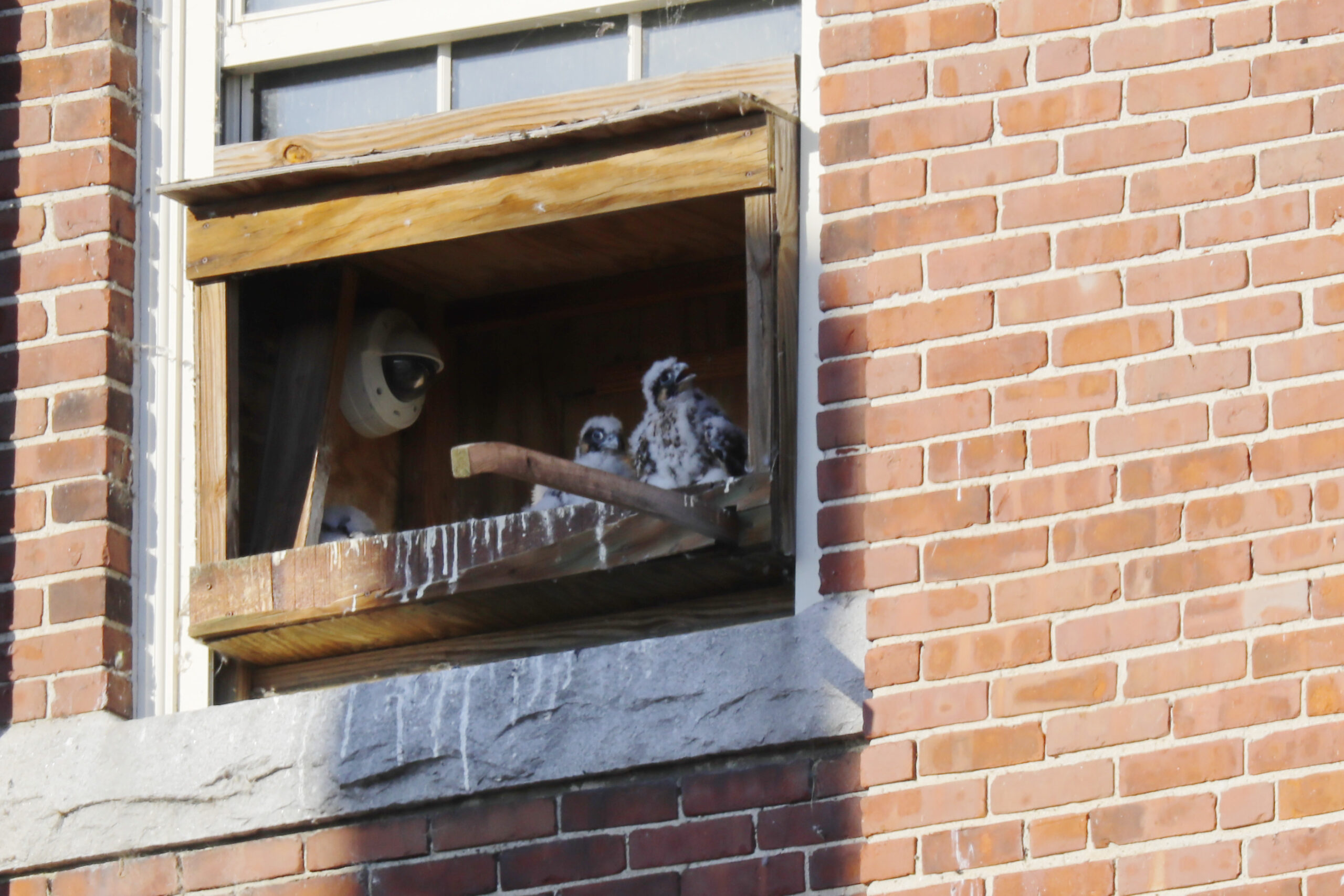
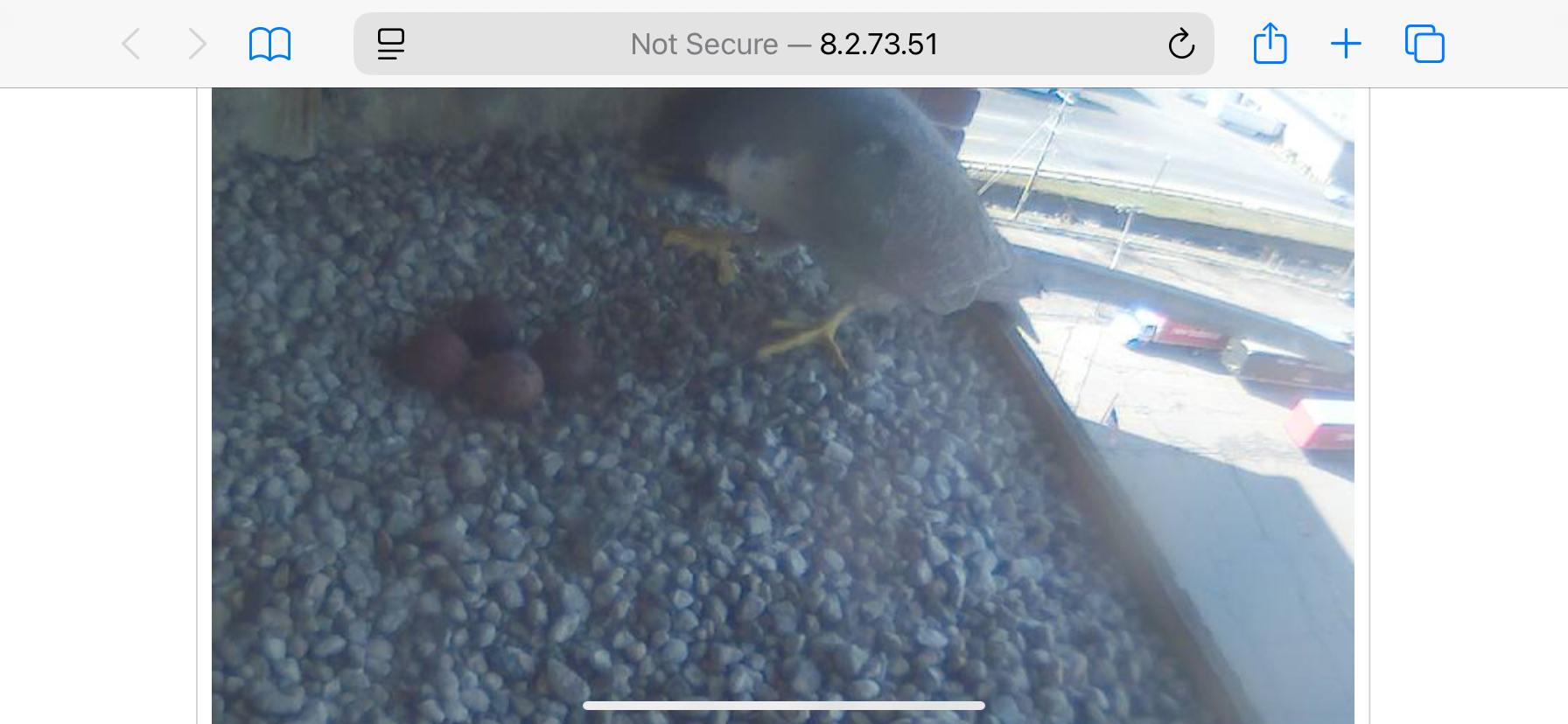
April 23, 2026: over the past week, the weather followed a typical early spring pattern, with mostly cloudy skies, periods of light rain and drizzle, and cool, damp conditions dominating much of the week. Temperatures generally ranged from the low 50s to low 60s, with occasional brief breaks of drier, milder air. Winds were light overall, and humidity remained elevated at times, even producing some patchy fog. While not especially bright or warm, the conditions were stable and seasonable, well suited for steady peregrine incubation activity.

During the second week of incubation, embryo development accelerates noticeably. The basic body plan is now established, and key structures including eyes, beak, spine, and limb buds become more defined each day. Blood vessels spread across the inner surface of the egg, supporting rapid growth and nutrient exchange from the yolk. Although nothing outwardly changes to the casual observer, the eggs are very much “alive” with activity inside. Consistent warmth remains critical, and the adults continue to make small, careful adjustmentssubtly rolling and repositioning the eggs to ensure even heat distribution and proper development.

Incubation duties continue in a steady, well-coordinated rhythm. The female still carries the primary responsibility, maintaining long, stable brooding sessions, especially overnight and during cooler or unsettled weather typical north of Boston. The male remains an active partner by delivering food regularly and taking short turns on the eggs, most often during daylight hours. These exchanges are smooth and purposeful, minimizing exposure time for the eggs. As the embryos grow and become more resilient, the pair’s routine becomes more efficient and predictable, quietly advancing toward the final stretch before hatching.

2026 Lawrence Peregrines: Week One

April 16, 2026 in In the Nest Box

April 16, 2026: Over the past week, early spring has continued to make its presence felt with a mix of mild, seasonable temperatures and variable conditions. Daytime highs from the mid-40s to low 60s, with cooler mornings and occasional breezy periods. There have been a few stretches of cloud cover along with intermittent rain, typical of April’s transitional pattern, but also some brighter, calmer windows. Overall, the weather has been well within the normal range for this time of year, providing stable conditions as the peregrines settle into full-time incubation.

In the first week of incubation, the four eggs are in the earliest stages of development, with cell division underway and the embryo beginning to form along the yolk surface. From the outside, little appears to change, the eggs remain still and subtly colored, but inside, the foundations of the chicks are being established. Maintaining a steady temperature (around 99–100°F) is critical at this stage, especially in early spring conditions north of Boston, where cool air and shifting winds can quickly affect exposed eggs. The female settles low over the clutch, using her brood patch to transfer heat, while making small, regular adjustments to keep all eggs evenly warmed.

Incubation duties are shared, though the female does the majority of the work. She typically remains on the eggs for long, consistent stretches, especially overnight, while the male provides food and periodically takes short incubation shifts during the day. These exchanges are smooth and efficient, the arriving bird may vocalize softly before the sitting bird rises, carefully revealing the eggs before switching places. The male’s time on the eggs is usually brief, but important, allowing the female to stretch, feed, and maintain her own condition. This steady rhythm of care continues through the coming weeks, setting the stage for successful hatching about a month from now!

2026 Lawrence Peregrines: Fourth Egg!

April 9, 2026 in In the Nest Box

April 9 under clear skies, wind S at 5MPH, temp at 27F: A major milestone for the Lawrence Peregrines, as the fourth egg was laid overnight on April 9, likely completing the full clutch for the 2026 breeding season. With four eggs now resting in the gravel-lined nest box, this pair has reached the typical upper range for peregrine falcons, setting the stage for what promises to be an exciting and closely watched season ahead.

With the clutch now complete, the focus shifts to full-time incubation. While some incubation behavior may have already begun, the female will now settle into a more consistent routine, carefully maintaining optimal warmth and positioning for all four eggs. The male will assist by providing food and occasionally relieving her for short periods.

Looking ahead, the timeline is right on track. Peregrine eggs typically hatch after 29–33 days of incubation, which places expected hatching sometime in early to mid-May. From that moment, the pace of activity will accelerate quickly, from fragile hatchlings to rapidly growing nestlings, all unfolding within the nest box and seen through the New Balance webcam.

For now, this is a moment to pause and appreciate, a complete clutch, a healthy pair, and the quiet, focused beginning of the next chapter in the peregrines’ breeding cycle!!

2026 Lawrence Peregrines: Third Egg!

April 7, 2026 in In the Nest Box

April 7, 2026: partly cloudy, calm, temp 35F. Another exciting milestone at the Lawrence Peregrines nest box as the third egg has been laid. After just a few observations on Monday, April 6, did not see the third egg, but today…..yes, third egg has been laid. With eggs typically arriving about every 48 hours, this continues a perfectly timed sequence following the first egg on April 2nd. Three eggs now sit in the gravel scrape, bringing the pair very close to a full clutch.

For peregrine falcons, a clutch of 3–4 eggs is most common, so there’s a strong possibility we may see a fourth egg in the next two days. Notably, this stage often marks the transition toward more consistent incubation, as females usually begin full-time incubation around the second-to-last egg. That means we’re right on the cusp of the next important phase.

In this webcam image, the female had just landed on the lateral perch outside the box before hopping inside. She has an efficient, watchful routine that reflects both vigilance and commitment. With three eggs now in place, anticipation builds as we look ahead to full incubation, hatching, and the remarkable weeks of growth to follow!

2026 Lawrence Peregrines: Second Egg!

April 4, 2026 in In the Nest Box

April 4, 2026: with a few clouds, wind N at 13MPH with gusts over 20MPH, temp 54F

Great news from the Lawrence Peregrines nest box as the second egg has been laid. In this webcam image, two rich, reddish-brown eggs rest in the gravel-lined scrape, a classic sign that the 2026 breeding season is unfolding exactly as expected. Peregrine falcons typically lay eggs about 48 hours apart, and with the first egg arriving overnight on April 2nd, this second egg confirms the pair is right on schedule.

Clutch size for peregrines is usually 3–4 eggs, so there’s a strong chance we may see one or two more in the coming days. Interestingly, full incubation often doesn’t begin until the second-to-last egg is laid, helping ensure that the chicks hatch closer together in time.

At the moment this photo was captured, the female can be seen standing watch from the lateral perch just outside the nest box. As always, she is alert, composed, and fully in command of her surroundings. It’s a classic posture, guarding the nest while allowing the clutch to develop. From here, we’ll be closely following each step with additional eggs, the onset of steady incubation, and eventually the exciting transition to hatching in just over 30 days, and then onto nestling growth.

A perfect start to what promises to be another remarkable season!

2026 Lawrence Peregrines: First Egg!

April 2, 2026 in In the Nest Box

April 2, 2026: This image shows the familiar gravel-lined interior of the Lawrence Peregrines’ nest box, viewed from the New Balance webcam. Nestled slightly left of center sits a single, freshly laid peregrine egg, its rich reddish-brown coloration standing out clearly against the muted tones of the small, rounded stones. The scrape itself appears lightly formed, with subtle depressions in the gravel where the adults have begun shaping the nesting area.

Along the right edge of the frame, the urban backdrop comes into view, with loud trucks moving along Merrimack Street below, offering a striking contrast between the quiet, intimate beginning of a new annual life cycle and the constant motion of the city surrounding it. It’s a powerful reminder of a conservation success story as these peregrines continue to thrive in an urban environment.

This first egg is a strong and encouraging sign! With peregrines typically laying a clutch of 3–4 eggs, this moment marks the true beginning of the 2026 breeding season. From here, you’ll be able to follow the full arc of the nesting cycle with additional eggs over the coming days, the steady rhythm of incubation, the anticipation of hatching, and eventually the rapid growth and fledging of the young. A wonderful season ahead!

Lawrence Peregrines: Incubation Week 3

April 23, 2025 in In the Nest Box

Wed. April 23: During the third week of incubation for a pair of nesting Peregrine Falcons (around days 14–21 after the last egg is laid), several key things happen in the development of the eggs and in the daily behavior of the adult falcons. Here’s a summary focused on your pair north of Boston:

Egg Development (Week 3)
– Embryo Growth: By the third week, the embryos are well developed, with feathers beginning to form, and their movements inside the egg become more noticeable. They are actively turning and shifting position, preparing for hatching.
– Vascularization: The blood vessels are fully extended in the egg membrane, aiding efficient gas exchange—essential as the chick grows.
– Yolk Absorption Begins: The yolk sac, which nourishes the chick, starts to be absorbed internally, especially near the end of this week.
– Hatching Preparation: By day 21, the embryos begin positioning themselves for pipping (breaking through the shell), which typically occurs between days 33–35 of incubation.

Adult Peregrine Behavior Patterns (Week 3 of Incubation)

Division of Labor
– Incubation Shifts:
– The female (typically larger) continues to do the majority of incubating, especially at night and during colder, windier times.
– The male relieves her for brief periods during the day—often mid-morning and mid-afternoon—allowing her time to feed, preen, and stretch.
– Exchange Ritual: They often vocalize softly to each other during nest exchanges, with the male bringing food and the female calling or even bowing slightly before rising off the eggs.

Foraging and Food Delivery
– The male is the primary hunter during this period.
– He catches small to medium birds (e.g., starlings, pigeons, shorebirds) and delivers them to the female.
– Sometimes food is cached nearby, but during incubation, fresh delivery is preferred.

Nest Defense and Territory Vigilance
– Both adults remain highly vigilant.
– The male frequently perches on nearby vantage points to scan for intruders (other raptors or people too close).
– They may engage in aerial displays or alarm calls if disturbed.

Rest and Maintenance
– The female rests frequently while incubating, shifting slightly every 20–30 minutes to rotate the eggs and maintain even warmth.
– The male*may also be seen preening, calling softly, or engaging in short flights.


Lawrence Peregrines: Incubation Week 1

April 9, 2025 in In the Nest Box

April 9, 2025: Egg Development (Week 1)

– Fertilization and Cleavage: After each egg is laid (usually every 48 hours), early cell division begins within the blastodisc if fertilization was successful.
– Embryo Formation: Around day 2, the embryonic disc starts differentiating into three germ layers (ectoderm, mesoderm, endoderm) which will form all tissues and organs.
– Heartbeat and Blood Vessels: By day 3 or 4, the tiny heart starts beating, and a web of blood vessels spreads across the yolk to deliver nutrients.
– Critical Window: Early development is especially sensitive to temperature fluctuations—consistent incubation is vital to prevent deformities or embryo loss.
– Yolk Sac Function: The yolk sac begins actively nourishing the embryo, which grows from a flat disc to a curled shape by the end of the week.

Adult Peregrine Behavior Patterns (Week 1 of Incubation)

Division of Labor
– Initiation of Full Incubation:
– Incubation begins in earnest after the third or fourth egg is laid to synchronize hatching.
– The female usually starts full-time incubation once the clutch is complete (often 4 eggs), and does the majority from the start.
– Male Support:
– The male may begin bringing prey more frequently and take short incubation turns (rarely more than 10–15 minutes early on).

Establishing the Rhythm
– The pair begins to settle into a consistent daily rhythm:
– The female incubates for hours at a time.
– The male perches nearby, hunts, and occasionally relieves her.
– Exchanges are brief and accompanied by gentle vocalizations, bowing, or mutual preening.

Territorial Vigilance
– Increased Defensiveness:
– The pair becomes more territorial and alert to potential threats.
– The male may perform territorial flights or warning stoops if other birds or humans come too close.

Nest and Egg Care
– Egg Turning Begins:
– Essential turning behavior (several times an hour) starts as soon as full-time incubation begins.
– Feathering and Shuffling:
– The adult may shift slightly to tuck the eggs into the brood patch (featherless skin area rich in blood vessels).
– The female often pulls in small stones or gravel with her beak to help cradle and insulate the eggs.


2025 Lawrence Peregrines: Laying Eggs!

March 25, 2025 in In the Nest Box

March 25, 2025: News from the Lawrence Peregrine Nest! Throughout March 2025, Peregrine watchers on the New Balance falcon cam observed the resident female showing strong signs of egg-laying. Special thanks to our friends at New Balance for keeping the webcam running! She frequently visited the nest box, rearranging gravel, forming a nest bowl, and regularly hunching over it as if incubating. She also spent long periods on the lateral perch pole outside, watching over her territory. All signs suggest she’s ready to lay her first egg—stay tuned for updates!

March 26, 2025: Exciting News: First Egg Arrives!

Overnight, our resident female laid her first egg, marking the first use of this nest box in years! Right on schedule for late March, she’ll likely lay additional eggs every 48 hours, starting incubation with the next-to-last egg. At this location, we’ve often seen 4 eggs per year, but from different mating pairs. Thanks again to our friends at New Balance for keeping the falcon webcam running.

March 27, 2025: Under sunny skies and breezy weather with temp highs near 50F. The female tends to her first egg on and off throughout the day. She devotes sometime to incubating and also just perching in the sun on the lateral perch pole. The second egg will hopefully drop overnight tonight. The view below shows her in the midst of moving around near the single egg in the middle of the afternoon after the sunlight had cast directly on the egg.

March 28, 2025: under partly cloudy, wind NW 9MPH, and temps in high 50’s. What an incredible experience to witness nature in real time! Watching the webcam, we’re thrilled to see a second egg, beautifully brown-speckled—now nestled in the nest box! Each egg brings us closer to a full clutch, and the excitement builds as our dedicated female tends to her growing brood. The privilege of observing this up close is a true gift (thanks New Balance); stay tuned for more updates as this season unfolds!
March 29, 2025: Cloudy with rain likely with patchy drizzle and fog. Temps high near 38. NE wind around 8 mph. Female peregrine falcons typically lay eggs every 48 hours, While most follow the standard interval, some may wait. Since incubation often starts after the second or third egg, slight delays don’t significantly impact hatching. Factors like weather, stress, or resource availability influence these variations. Let’s hope for a third egg overnight tonight!
March 30, 2025: patchy fog, cloudy, with a high near 45. East wind 11 to 13 mph. After looking many times at the webcam for an additional egg overnight, the female finally rose up off of the two eggs this morning for a stretch and bathroom break, but no third egg spotted yet…..stay tuned!
March 31, 2025: A slight chance of showers and areas of fog, cloudy, with a high near 69. Light and variable wind becoming southwest 9 to 14 mph in the morning. Winds could gust as high as 29 mph. It’s often times amazing how the natural world throws us all kinds of surprises and keeps us humble in the process. Again, great joy this morning to observe a third egg that has been laid. The female is now spending more time over the eggs in incubation mode. Now we can hold out high hopes for a full clutch of 4 eggs!
April 2, 2025: under clear skies, wind N 8MPH, temp 31F;  What a thrilling morning discovery; the fourth and likely final egg was laid overnight! Our dedicated female has carefully laid a full clutch, right on schedule, marking a huge milestone for this season. Now, the wait for incubation begins!
Pure joy watching this unfold—stay tuned for the next chapter in this amazing and joyous return to the New Balance nest box!

Lawrence Peregrines: week of March 20, 2023

March 26, 2023 in In the Nest Box, Near the Clock Tower

March 20, 2023 under clear skies, wind W at 13MPH, temp at 36F. After searching all around the Clock Tower, made way for the red brick Pacific Mills smokestack and located one of the Peregrines sunning and preening on the east side of the stack near the top. This was a common perch location last year when the nest ledge was under the Casey Bridge. Image just before 10AM.

Just a few minutes later while looking for the second falcon, made a possible sighting and then confirmed right away. The other falcon was perched up near the top of the Clock Tower, on the top of a north facing window frame in the shade, and just keeping an open eye. Image at 10:06AM. The falcons have not been in or near the nest box over the past week, so stay tuned!

March 21, 2023 at 10AM under overcast skies, wind SW at 5MPH, temp at 44F. After initial scouting around the Clock Tower, headed west on Merrimack Street and turned north onto the Casey Bridge. About halfway across the bridge, noticed the male Peregrine perched on one of the Pacific Mills rooftop edges facing south with a gaggle of Crows nearby. The male appears to have a full crop. Peregrines like many other birds, come equipped with an anatomical feature known as a “crop.”  It is essentially a widened pouch at the bottom of a Peregrine’s esophagus, just above the stomach.  Peregrines can store food in their crops and then, slowly transfer it to their stomachs as they digest. They will often display a noticeable swelling in their chests when their crops are full.  The male has a very full crop, strong evidence that it had just finished a meal!

Minutes later, discovered the unbanded female lounging on the SW rooftop corner of the Mill240 building. This has been a regular perch location this spring, and provides an excellent vantage point both up and down the Merrimack River. The river is a significant flyway for all kinds of local birds and ducks. She heard the active call from the male and launched into flight and landed on the red brick Pacific Mills smokestack.

March 22, 2023, just after 10AM, under clear skies, wind NE at 6MPH, and temp at 46F. Great news this morning while checking the New Balance web cam! Not one but both male and female Peregrines inside the nest box. The male had been finishing off a meal with the female out on the perch. The female came in and then the male was seen pushing gravel around in the bowl-shaped “scrape” area in the back left corner from the camera view. One or another of the pair can often be seen to lean forward, pushing with its talons, to use its breast to form the substrate into a bowl (scrape) where the eggs will be laid.  Scraping is part of courtship. The birds continue to work on the scrape in preparation for egg laying. Eggs should appear sometime toward the end of this month, or first week in April at the latest. Stay tuned!

March 23, 2023 under overcast skies, wind W 12MPH, and temp at 59F. Made a late afternoon visit to the Clock Tower and found both Peregrines on upper ledges.

Female in flight……

Male cleaning his bill on roof edge after food exchange

March 24, 2023 under mostly cloudy skies, wind W 8MPH, and temp at 44F. Webcam in the morning, male working on the scrape by laying his chest down and and using his legs to forward to deepen the scrape bowl.

March 26, 2023 at just after 6PM, under clear skies, strong W winds at 16MPH with gusts to 26MPH, and temp at 54F. The female continues to linger and spend time in the New Balance nest box.