Lawrence Peregrines: very handsome eggs!
April 14, 2018 in In the Nest Box, lawrence peregrines, Peregrine Falcons Eastern Massachusetts, Peregrine Falcons Massachusetts
Saturday morning started off with clear skies and bright sun, with a bit of haze. During the morning the skies turned partly cloudy and then completely overcast. The wind started out from the north at 8MPH, and then shifted around to the east, but remained around the same speed until picking up speed late in the day. The temp hovered around 50F most of the day.
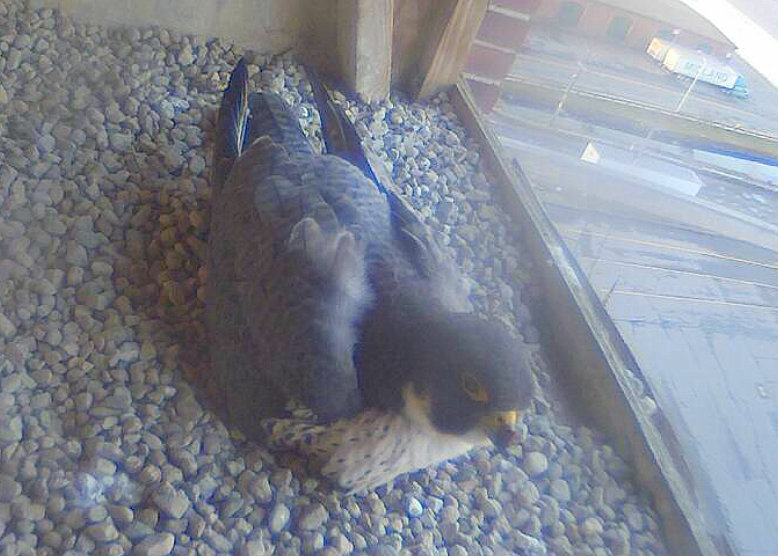
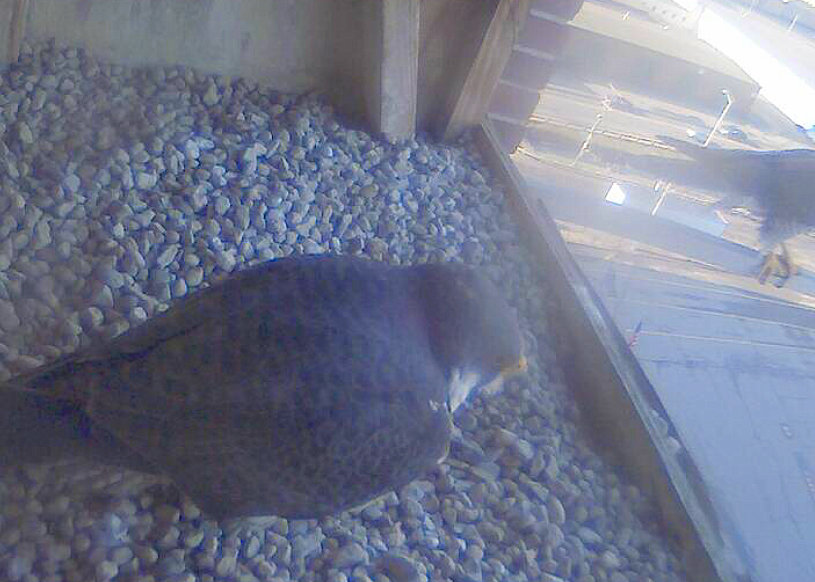
 The peregrines spent most of the day in incubation mode. Some times, you have to watch for quite a while until you observe a break in the action! It is fascinating to watch how careful they are when hovering over and then settling onto the eggs. Frequently, you will be able to watch a nervous twitching and jiggling around until the incubating bird gets it just right.
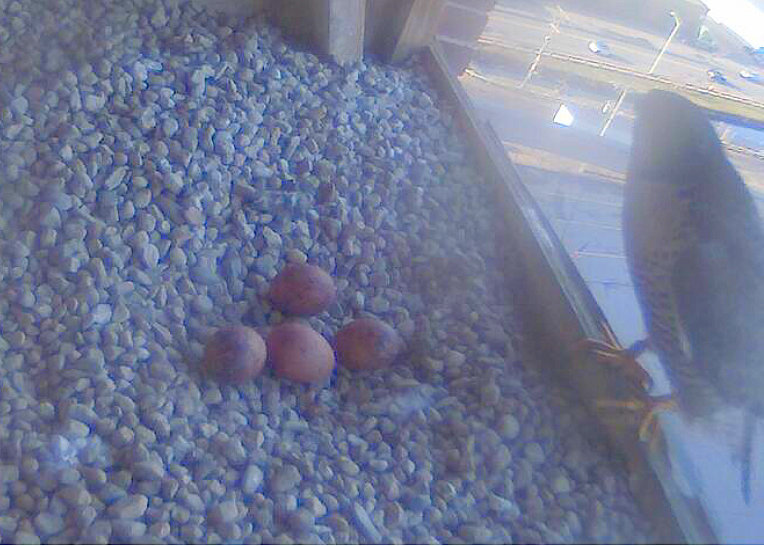
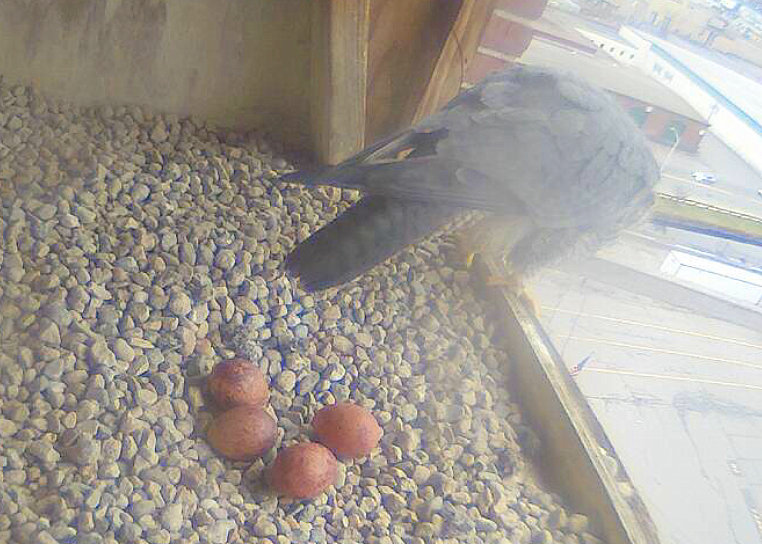 According to Derek Ratcliffe, the eggs of the peregrine falcon are among the most handsome laid by any species of bird! He notes that the prevailing color is reddish-brown with a wide variation. The surface of the fresh egg has variable amounts of bright red-brown markings appearing as a freckled, mottled, or blotched layer which can easily be rubbed off when the shell is wet. This non-fast layer of pigment gives a peregrine egg much of its beauty and richness, and in fresh specimens is often accompanies by a kind of bloom!
Literature cited: Ratcliffe, D. 1993. The Peregrine Falcon. 2nd ed. Carlton, England: T. and A. D. Poyser.