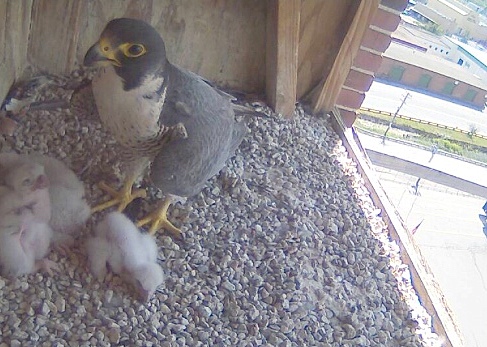
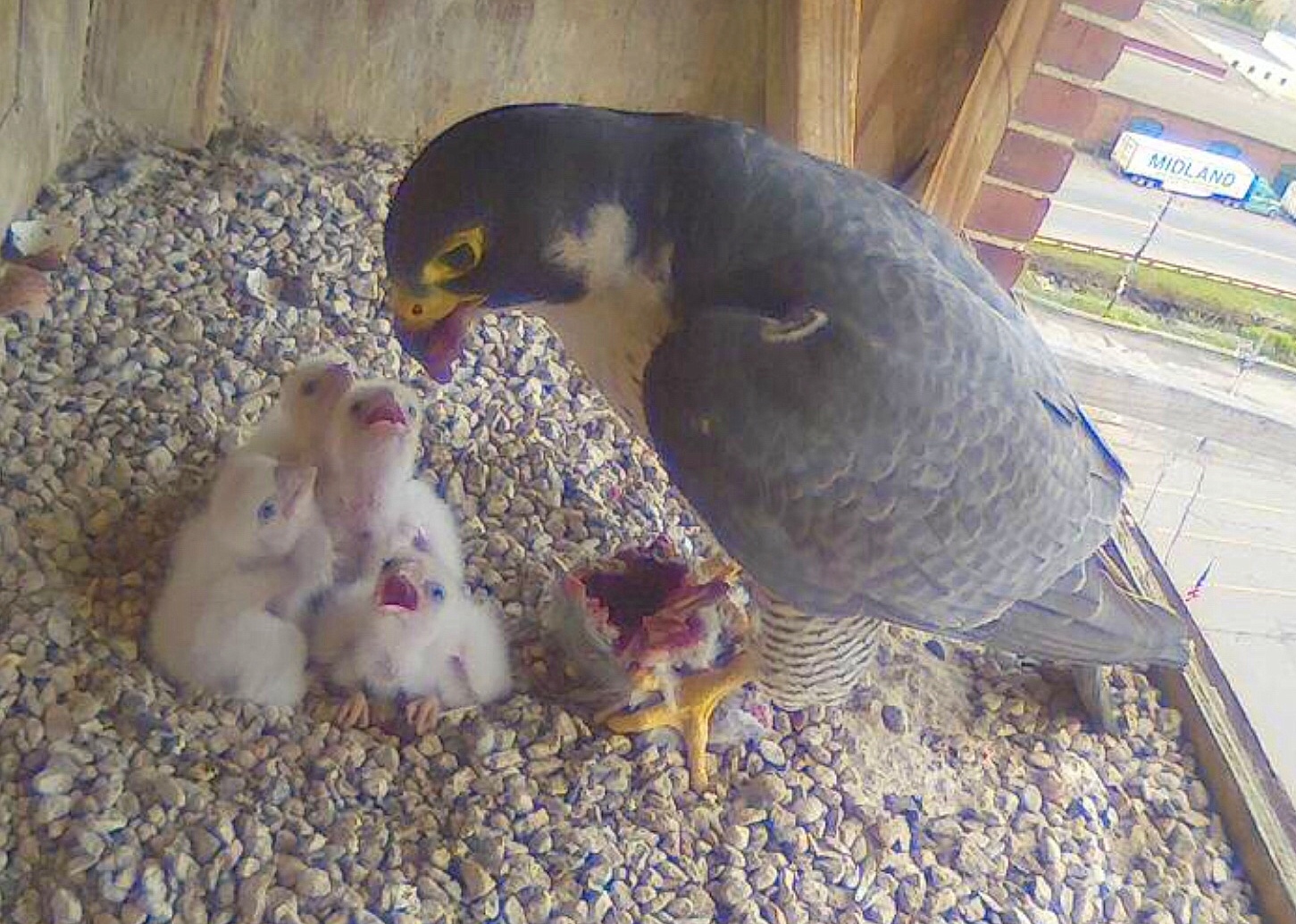
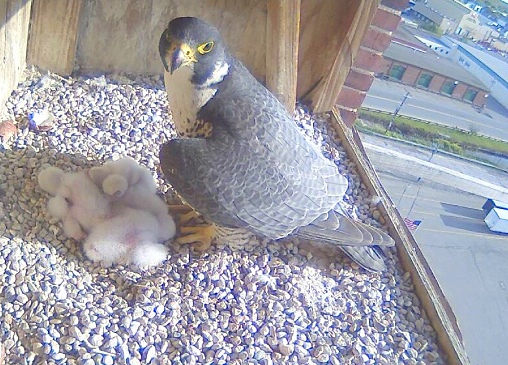
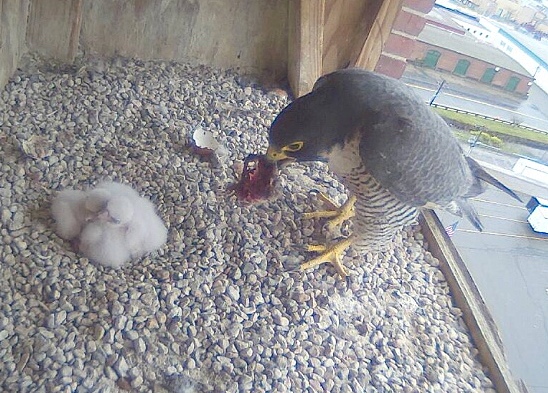
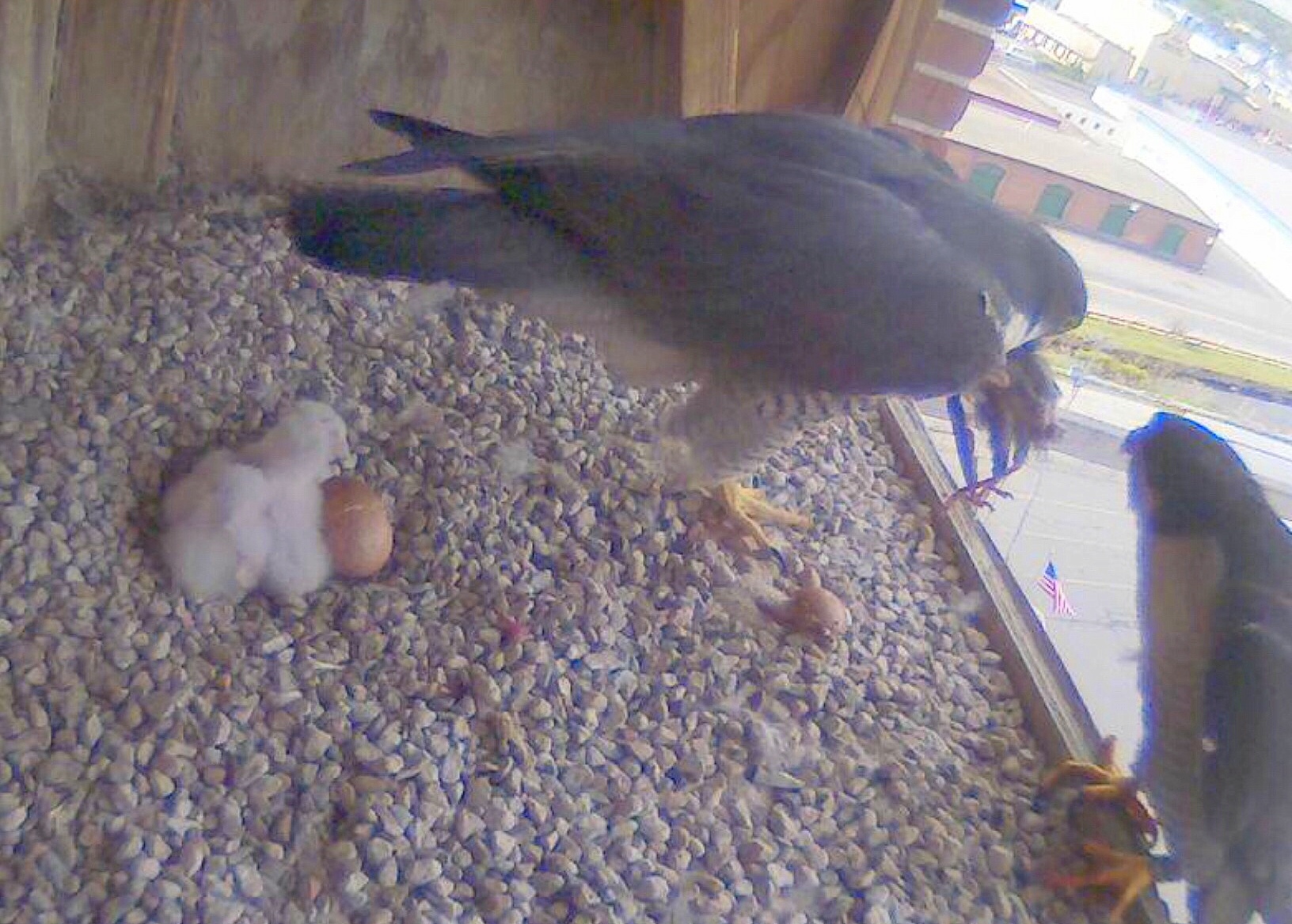
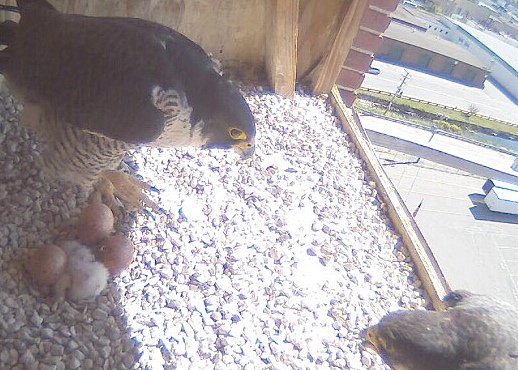
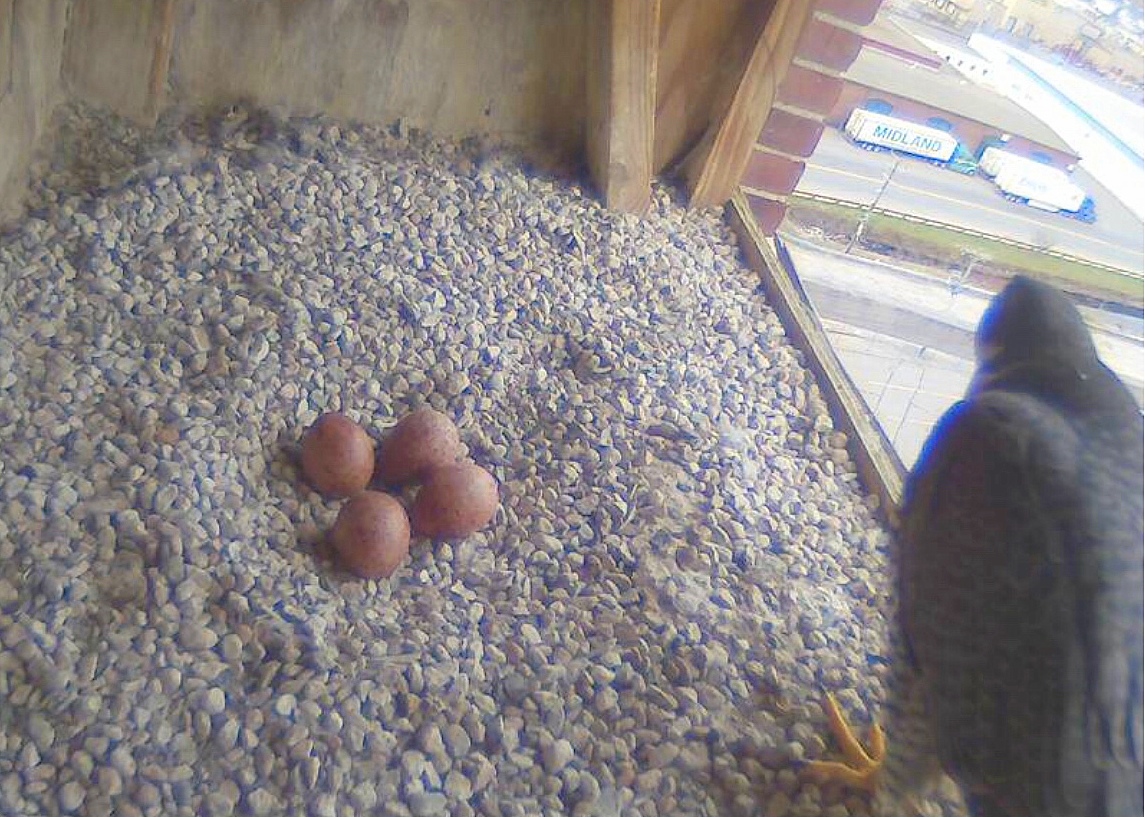
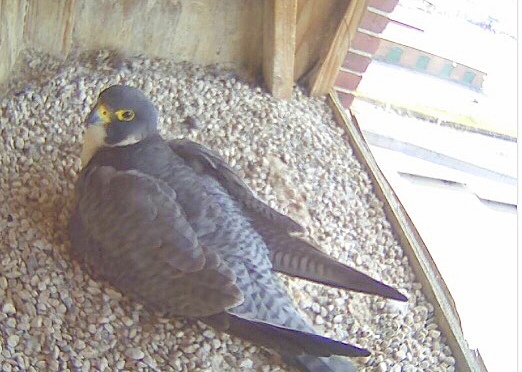
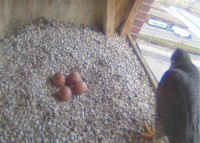
 As the incubation process continues, many have asked for more specifics about how it all works?
Heat makes the eggs start developing. When the eggs reach about 98.6°F, or 37°C the egg begins changing into an eyas. Conveniently enough, a Peregrine’s natural body temperature is about 103°F, or 39.5°C, so to heat up the eggs all they need to do is to get some of that body heat onto the eggs. Now, a Peregrine’s feathers make very good insulation. That’s how they can stand to stay out in cold temperatures without freezing to death. But while those feathers keep the cold air away from the falcon’s skin, they also keep their body heat from getting out. So to incubate the eggs, the Peregrine carefully settles down, shifting from side to side to get the eggs beneath their feathers. Falcons have brood patches, areas on their breasts with a lot of blood vessels close to the surface of their skin. The blood vessels concentrate their body heat, making it easier to transfer the heat to the eggs. Both adults have brood patches, though his are smaller than hers, which makes sense since he’s a smaller bird.
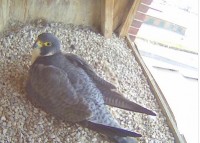 Peregrines incubate their eggs for 29 to 33 days. In the early days of brooding it’s important to keep the eggs as close to their ideal incubating temperature as possible. Too hot or too cool and the eggs won’t develop properly. Later in the incubation process, proper temperature isn’t quite as important. In fact, after a couple of weeks the falcons will be able to leave the eggs uncovered for longer periods of time. Sometimes leaving the eggs uncovered frequently, or for long periods can mean that the eggs hatch a few days later than normal. For the Lawrence Peregrines, their nest box is in a place where it’s not likely to be disturbed, so they most often incubate steadily until the eggs hatch.

 The chicks are growing in size with boundless appetites! They are now more erect at feeding time and ready to gobble each meal brought in by the female. This is an evening feeding, about 90 minutes before sunset and now we can see their wings, used to help with balance, while they feed.