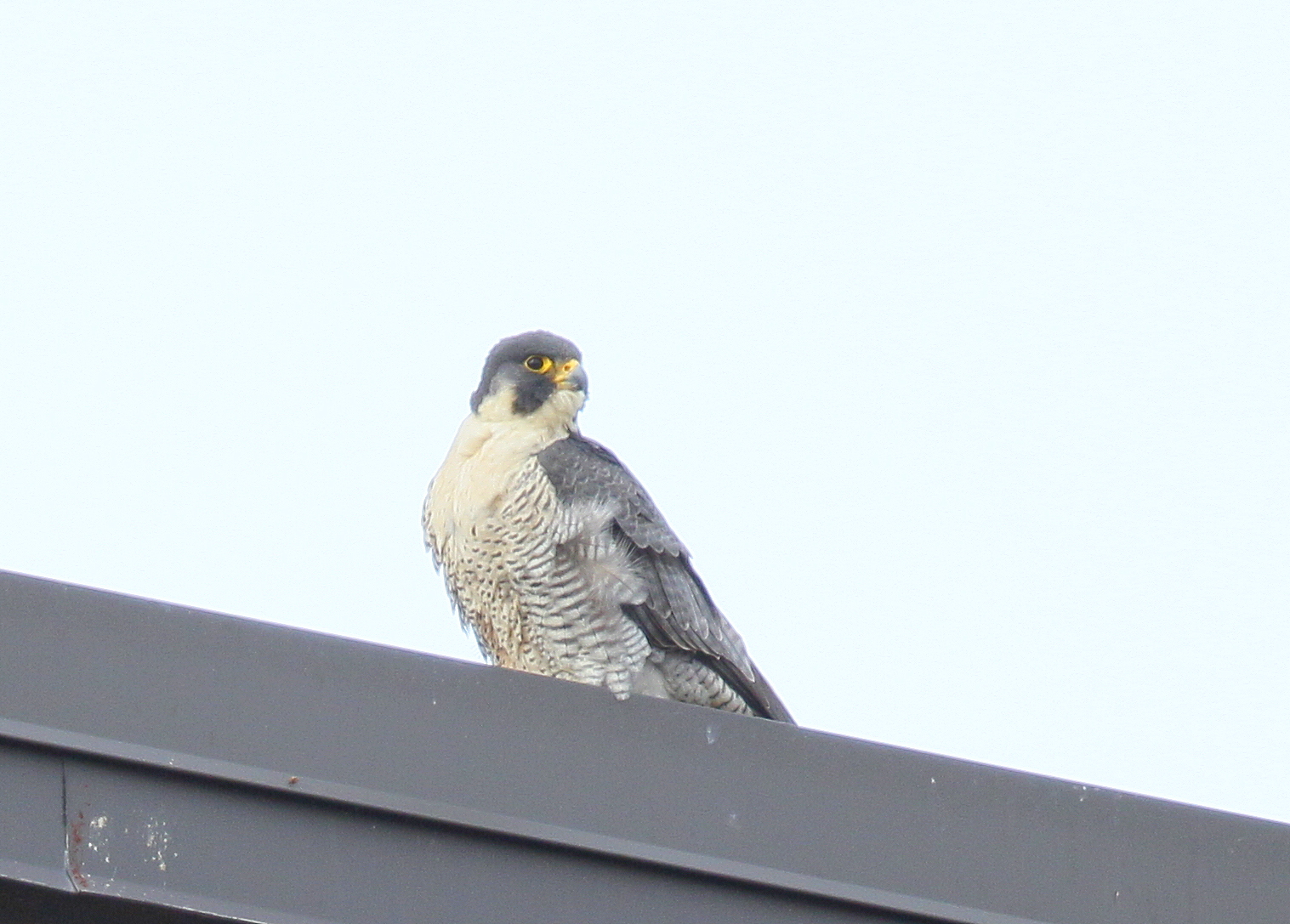
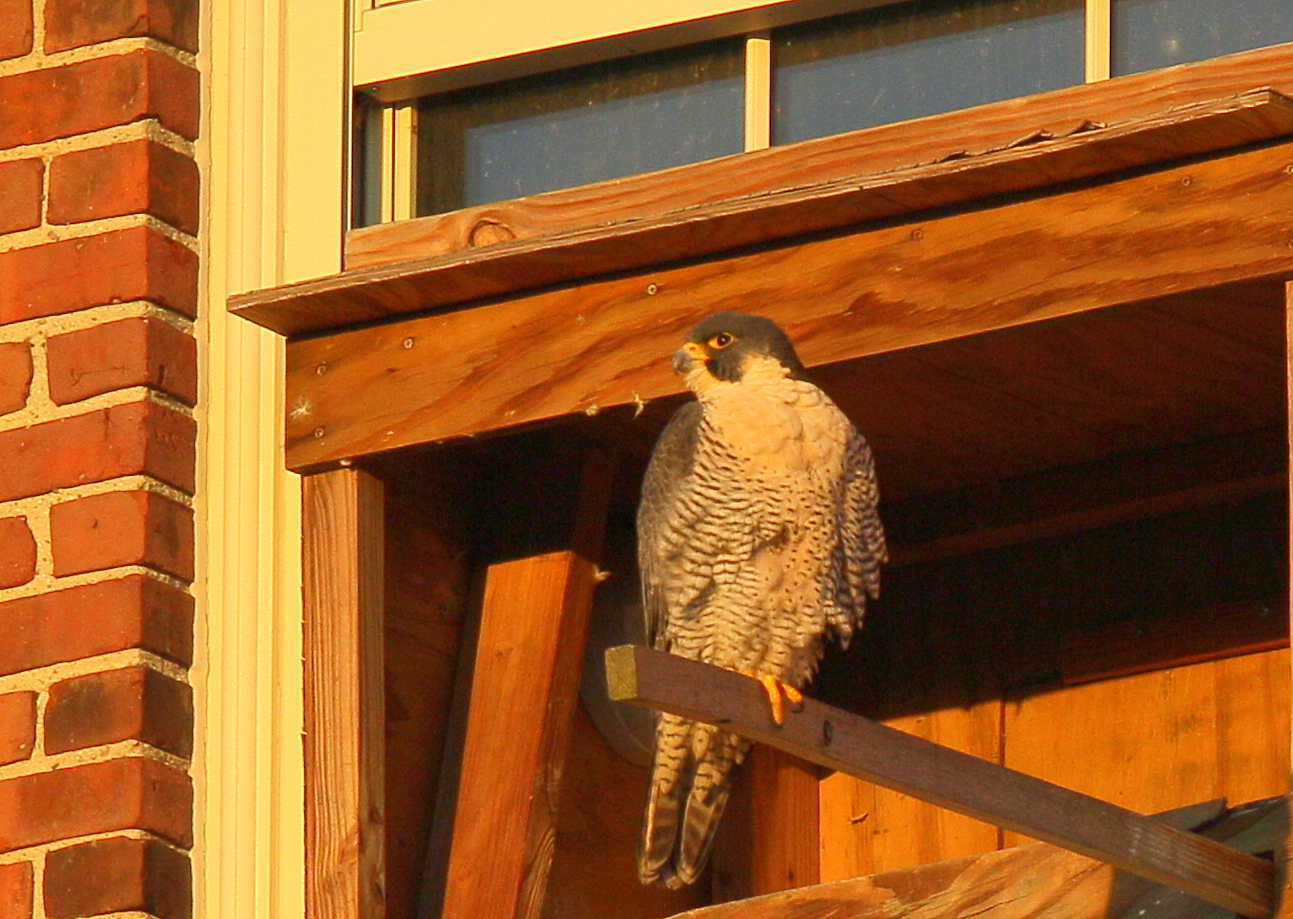
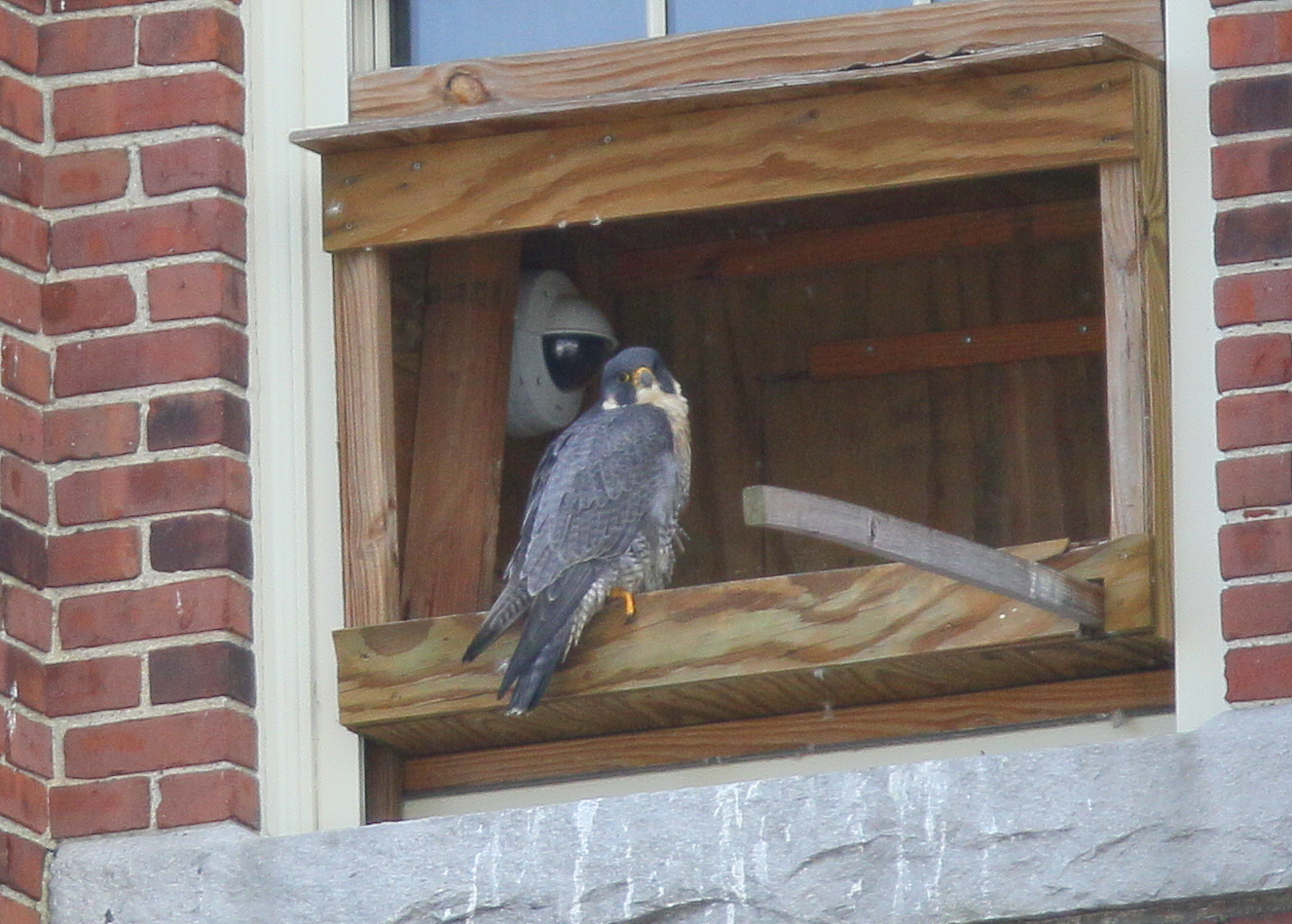
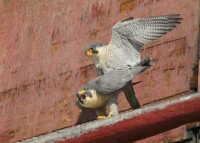
 What a blessing to be able to observe, monitor, and document the Lawrence Peregrines over the last 2.5 years. As an update from prior post, the peregrines continue to both be seen daily around the Clock Tower on Merrimack St. in Lawrence. On Tuesday morning, had a strong feeling to dedicate extra time before work to stop, wait, and observe. Just a few minutes before departing, the male peregrine went flying by and then landed on a perch. In an unusual twist, the male then changed perch locations 3 times in a few minutes. He then perched on a stub iron beam just below the roof line above the loading docks at 200 Merrimack St. This a is a regular perch. To my surprise, another peregrine call emerged and really caught my attention! The female was perched 2 floors below. I’m thinking that……this could become interesting! The female continued to call, turned her head, and many times looked up at the male while calling. Well, it is that time of year, and I’ve been fortunate to observe this pair in copulation mode in prior years.
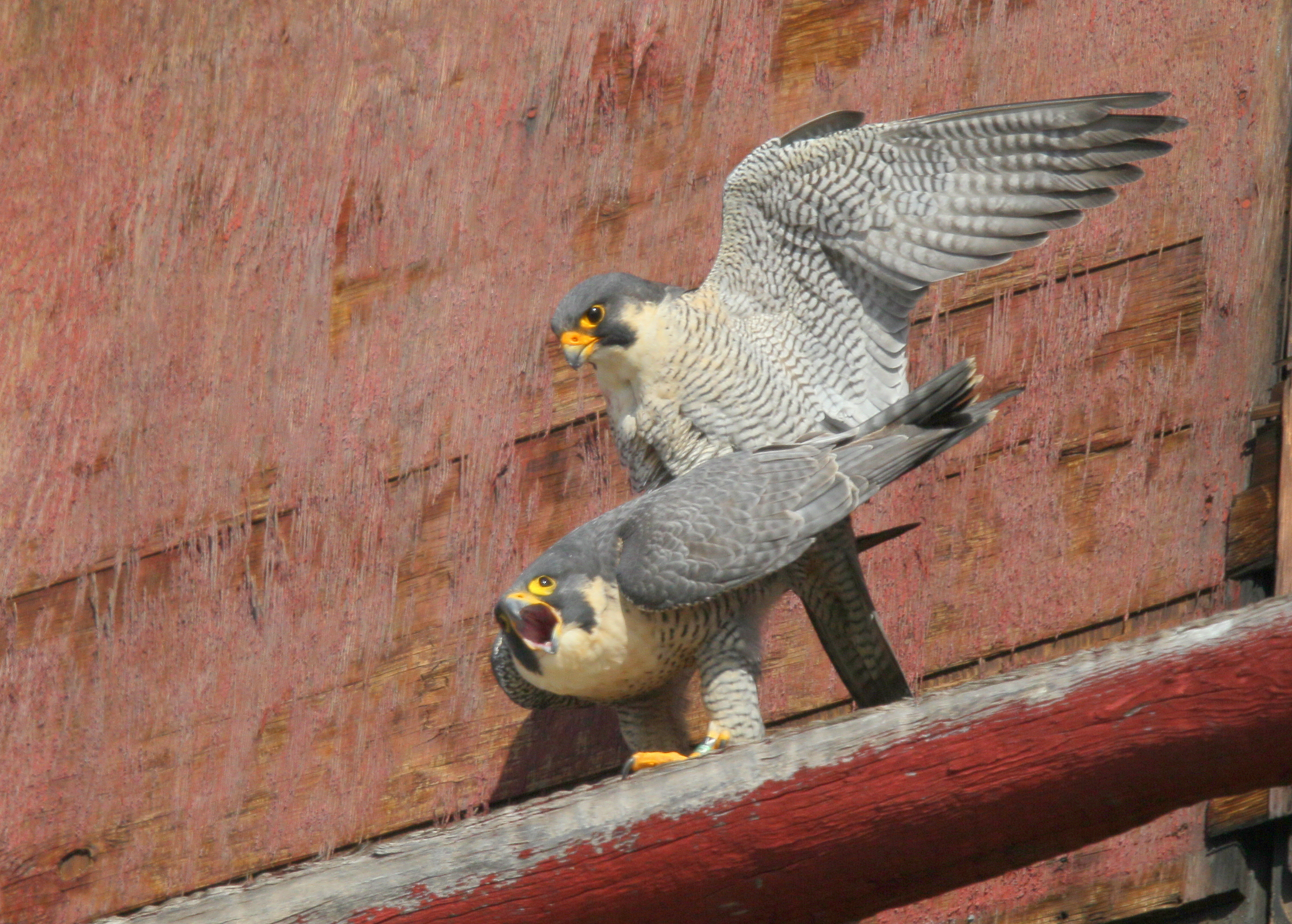
From the Cornell Labs Birds of North America Online, here is a very accurate description of the peregrine copulation sequence: “Either sex solicits copulation. Elements of solicitation displays may begin 3 weeks prior to copulation. Female solicitation begins with vertical head-low bow accompanied by a whine when male is still at a distance. As male approaches, female assumes horizontal head-low posture perpendicular to or facing away from male with panel feathers raised, accompanied by whine, and may be held up to 30 seconds. The male mounts from the air. He flies in and prepares to mount.
The female sleeks her feathers, crouches and leans forward and may move her tail up and to the side. During copulation, the female is at a 45 degree angle with wings slightly lifted and extended from elbow, sometimes with her tail partly spread.The male maintains an upright position during copulation by flapping high above his body and balancing on his tarsi with closed toes and feet turned inward. The male chitters while she gives a copulatory wail. It is fairly loud.
Completed copulations begin at least 2 weeks prior to egg laying. During completed copulations, full cloacal contact ranges about 5 seconds earlier in the season, then up to 10 seconds. The copulation activity is normally conducted in close proximity to the nest. Copulations continue until the final egg is laid.” This sequence was exactly 10 seconds based on the time stamp on the photos!
For those with an interest, full photo sequence posted: http://www.pbase.com/birdshots/image/154741511
CLICK “NEXT” IN UPPER RIGHT CORNER TO ADVANCE FRAMES.

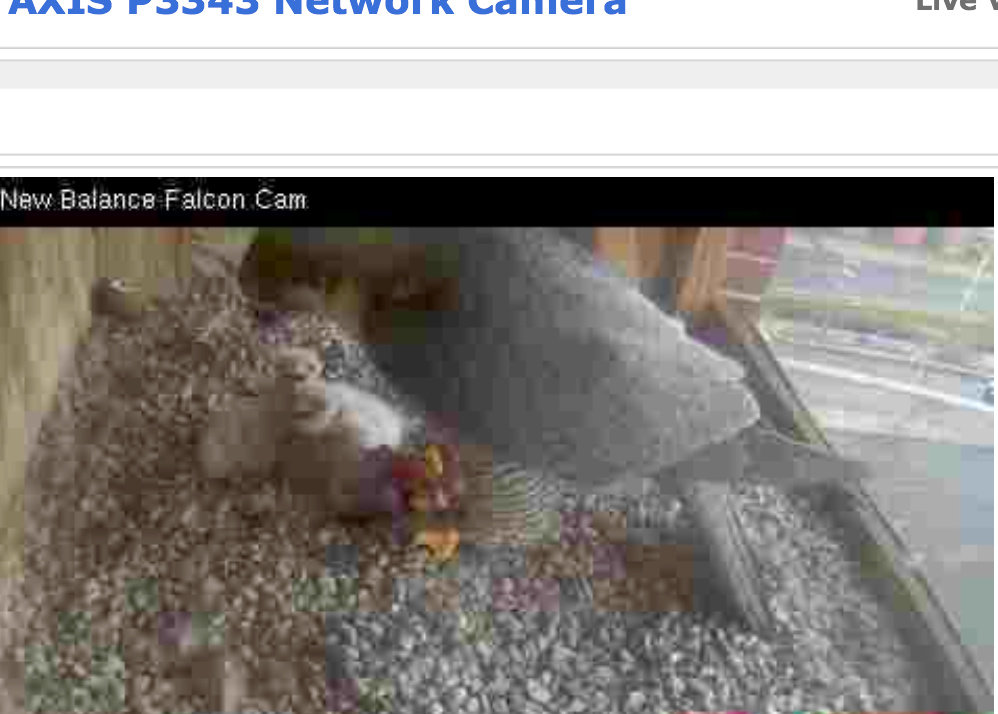 ks weigh about 1.5 ounces and are virtually blind. Covered with only a light coat of fluffy white down, newborn chicks require constant brooding by the female in order to stay warm. Feeding usually commences on day two when the small chick bobs its head looking for food. The female provides small pieces of food for the chicks!