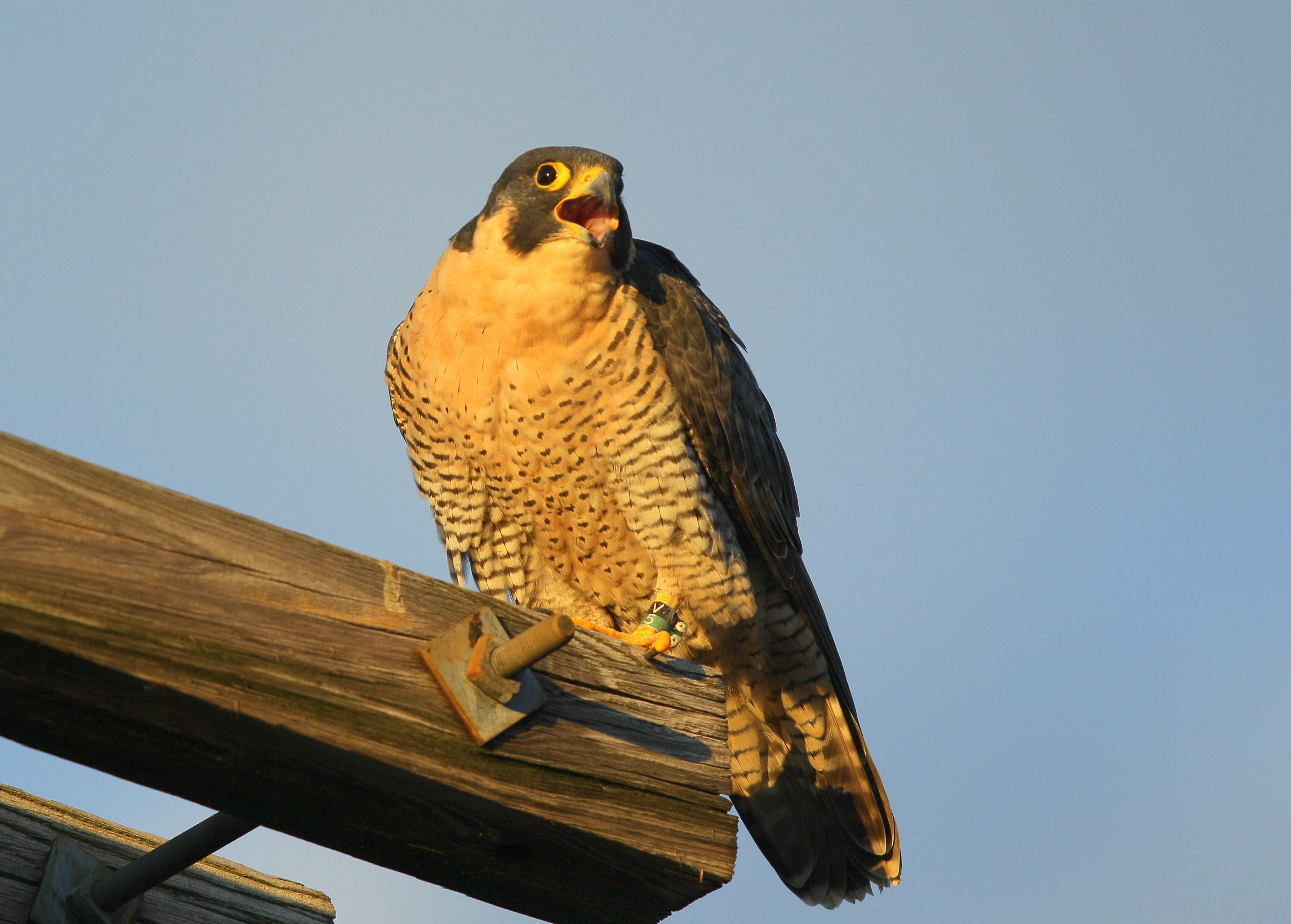
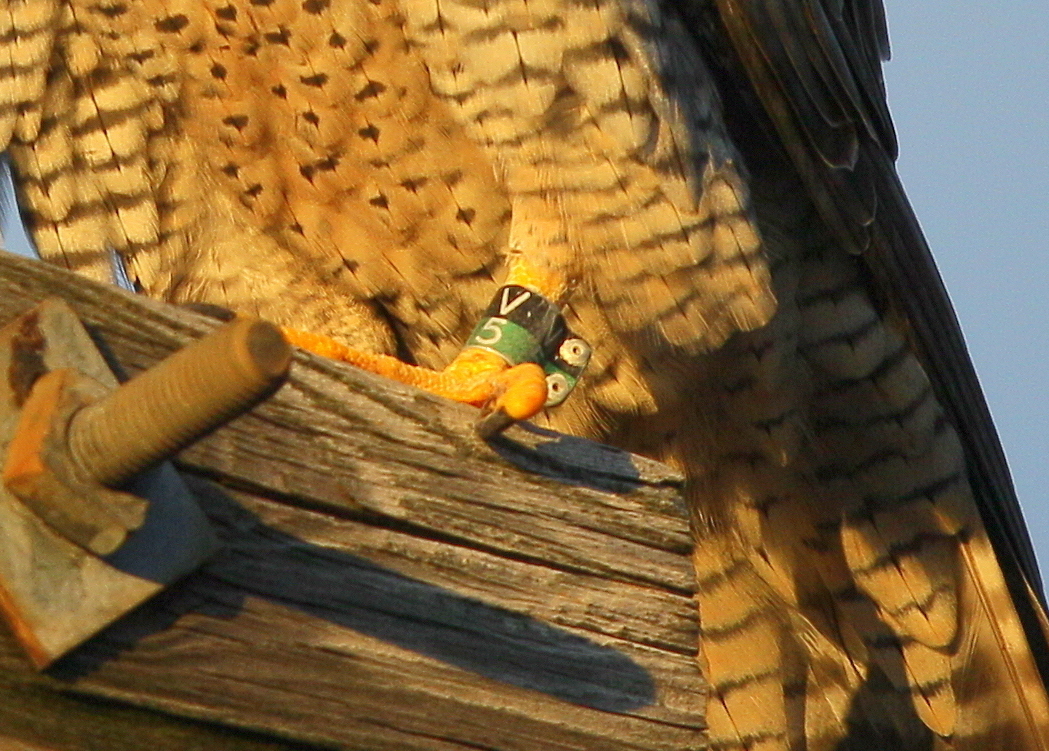
Peregrine female (V/5) injured, cared for, and released

January 11, 2015 in Near the Clock Tower
From an article in the Eagle Tribune Sunday, Jan. 11, 2015

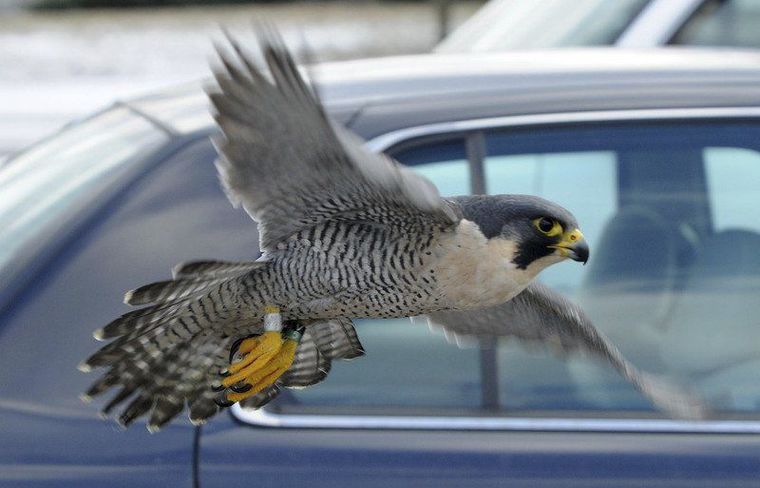
LAWRENCE — An injured Peregrine falcon was set free this week after being taken care of by Lawrence police.  On Tuesday, a Coolidge Street woman called police saying she’d found a falcon that appeared to be hurt.  Animal Control Officer Ellen Bistany Mastorakis tapped Det. David Augusta, a licensed falconer, for his help.  The falcon appeared to have a scrape on one of its digits, so Mastorakis and Augusta together stretched a nylon over the bird.  The nylon created a straight-jacket of sorts on the falcon, so Augusta could get a good a good look at her talons.  “Which are like knives. So is the beak,” Mastorakis said.

The two took the falcon back to the pound. They found a band on one of it’s legs with a number.  A call to the state revealed this falcon was banded while nesting in the city’s Ayer Mill Clock Tower in 2003.  “They figured she was two years old at the time. So that makes her 14,” Mastorakis said.  The falcon’s wings were fine. So Wednesday afternoon, Augusta expertly set the falcon free again.   Based on her history, however, it doesn’t sound like she’ll go far.

Article by: By Jill Harmacinski

Photo by Paul Bilodeau:  Lawrence Police Det. Dave Augusta lets a female Peregrine falcon go after it was found in an alley in Lawrence. Augusta fed the falcon and released it a day later, making sure it was not hurt.
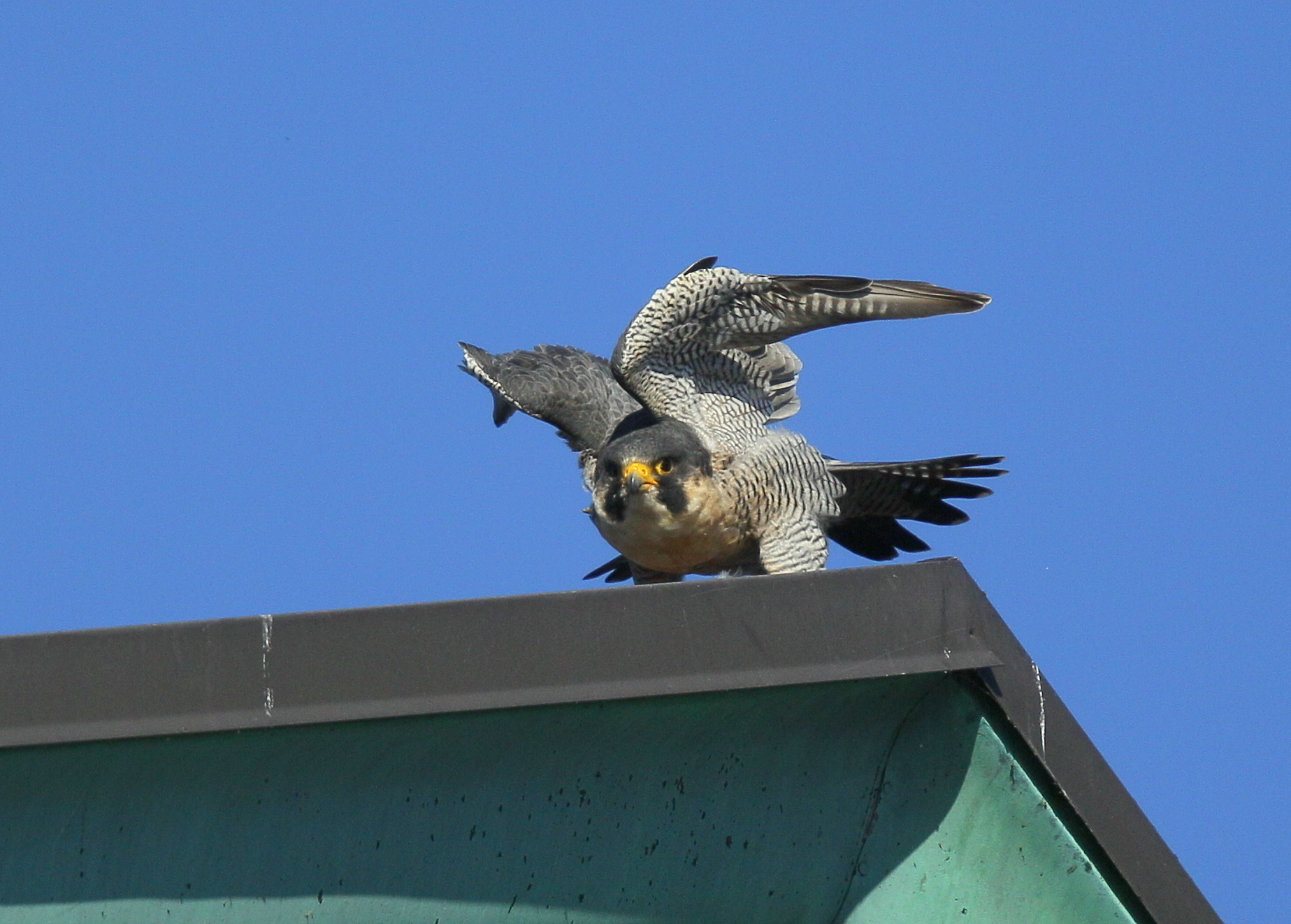
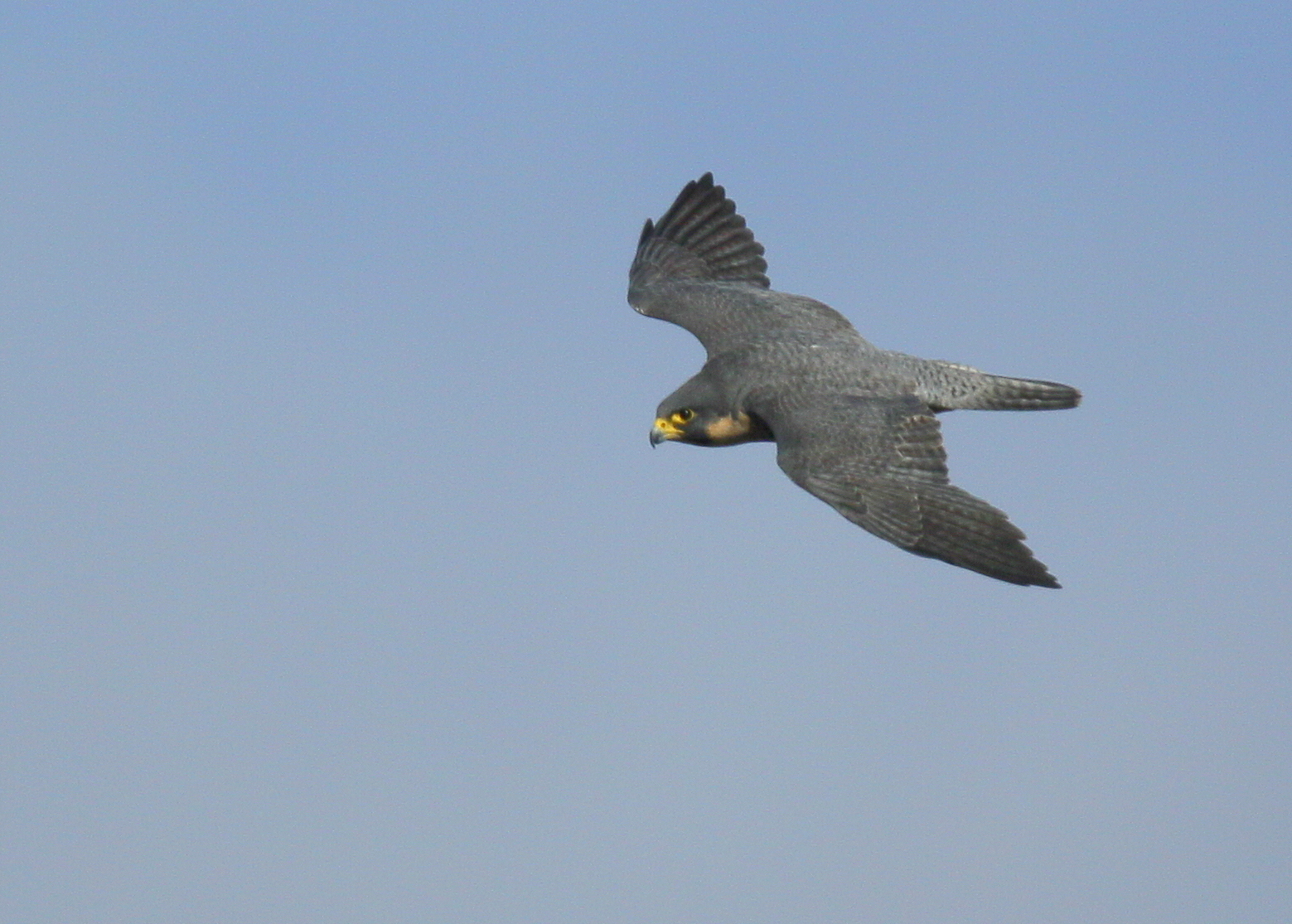
Peregrine on rooftop at 200 Merrimack St.

November 10, 2014 in Near the Clock Tower

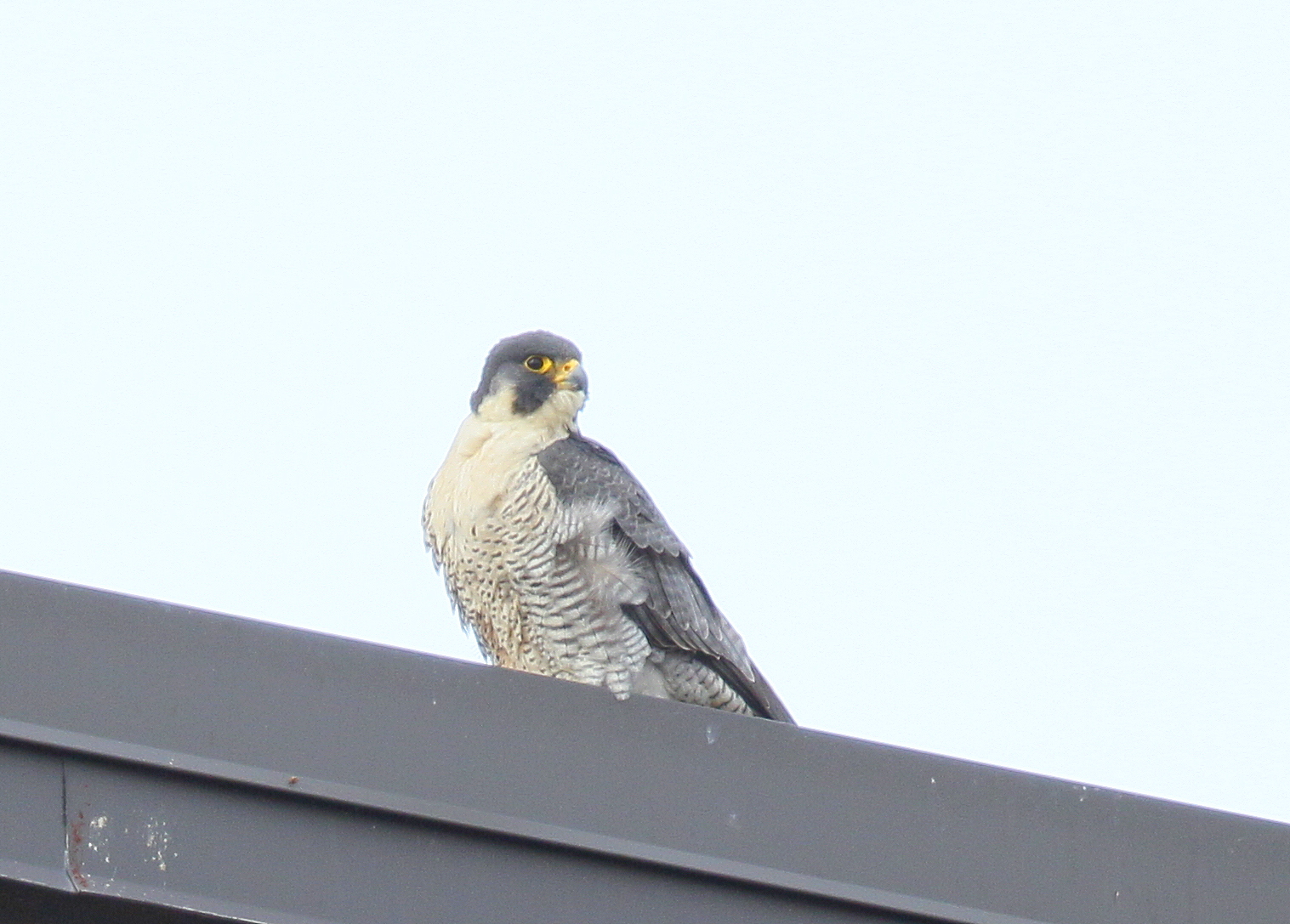
Both peregrines are seen regularly perched atop the triangular pediments around the southeast corner of 200 Merrimack St. in Lawrence.  On sunny days they are beautifully lit up by the morning sun.  They may be better viewed from the top floor of the nearby parking garage!

Peregrines rooftop perch!

October 30, 2014 in Near the Clock Tower

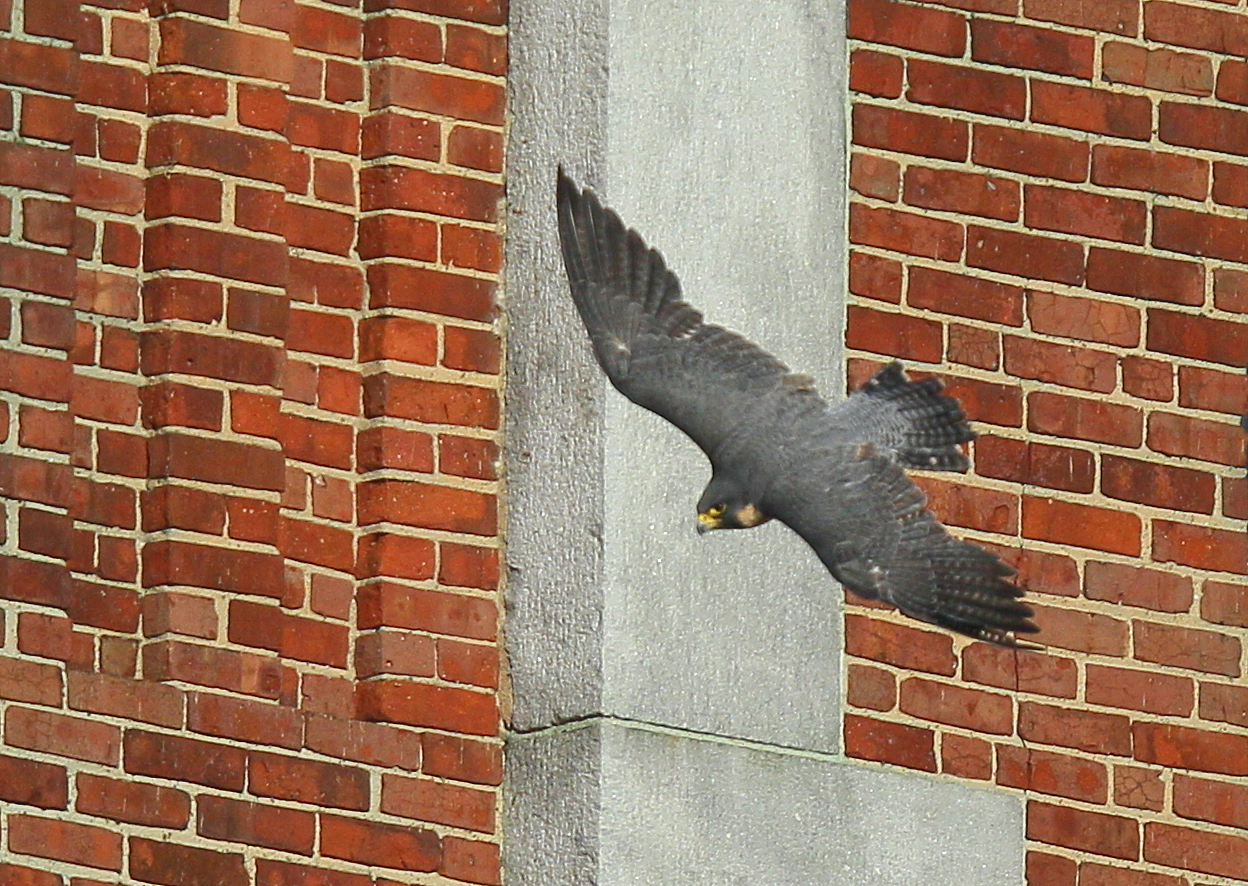
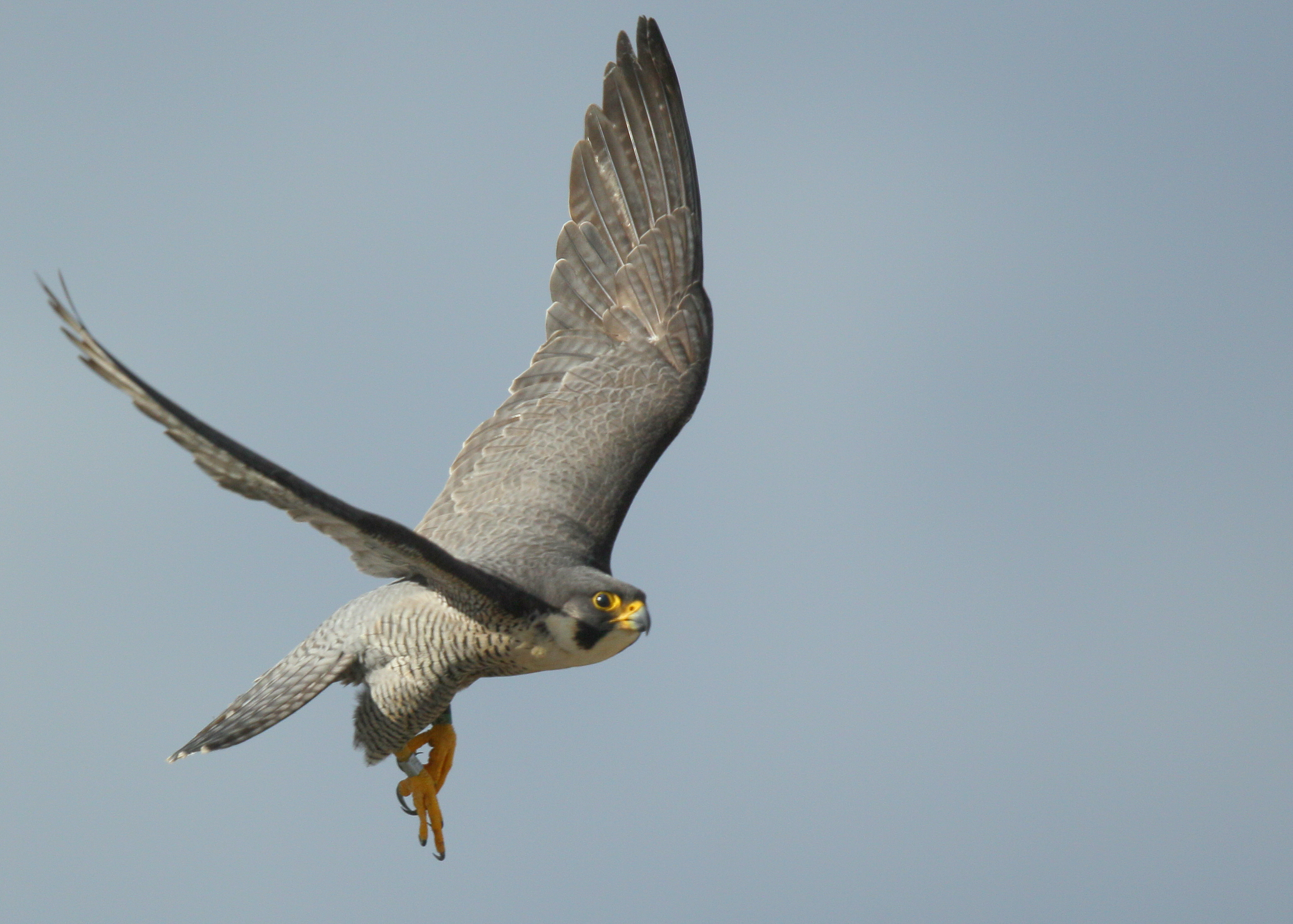
The pair of adult peregrines are seen with almost daily regularity on and around the Clock Tower in Lawrence.  This morning they were perched atop roof pediments located on the southeast corner of the brick building at 200 Merrimack St just above the stoplights at Merrimack and south Union Streets.  It is always a thrill to watch them burst into flight mode and loop around the local area.

For those with an interest, more flight photos posted:

http://www.pbase.com/birdshots/image/158046045   Click “next” upper right corner to advance!

Enjoy!

Peregrine atop nearby utility pole

October 8, 2014 in Near the Clock Tower

The peregrines were both seen late this afternoon in flight and perched around the Clock Tower.  While enjoying a short visit, there were numerous sorties after nearby prey and other uninvited local intruders.  As the sun was getting low in the sky, the female with clearly seen leg bands (V/5) came to rest on a favorite utility pole perch along Merrimack St.  The close views were unexpected but very enjoyable!


Peregrines around Clock Tower

September 23, 2014 in Near the Clock Tower

The Peregrines were both seen this morning in looping flight around the Clock Tower.  It was three years ago this week that they first came to my attention!  They have been a source of fascination and close observation ever since.  This time of year, they seem to have returned from their summer forays, perhaps at Plum Island.  They are seen from here on in with great regularity.

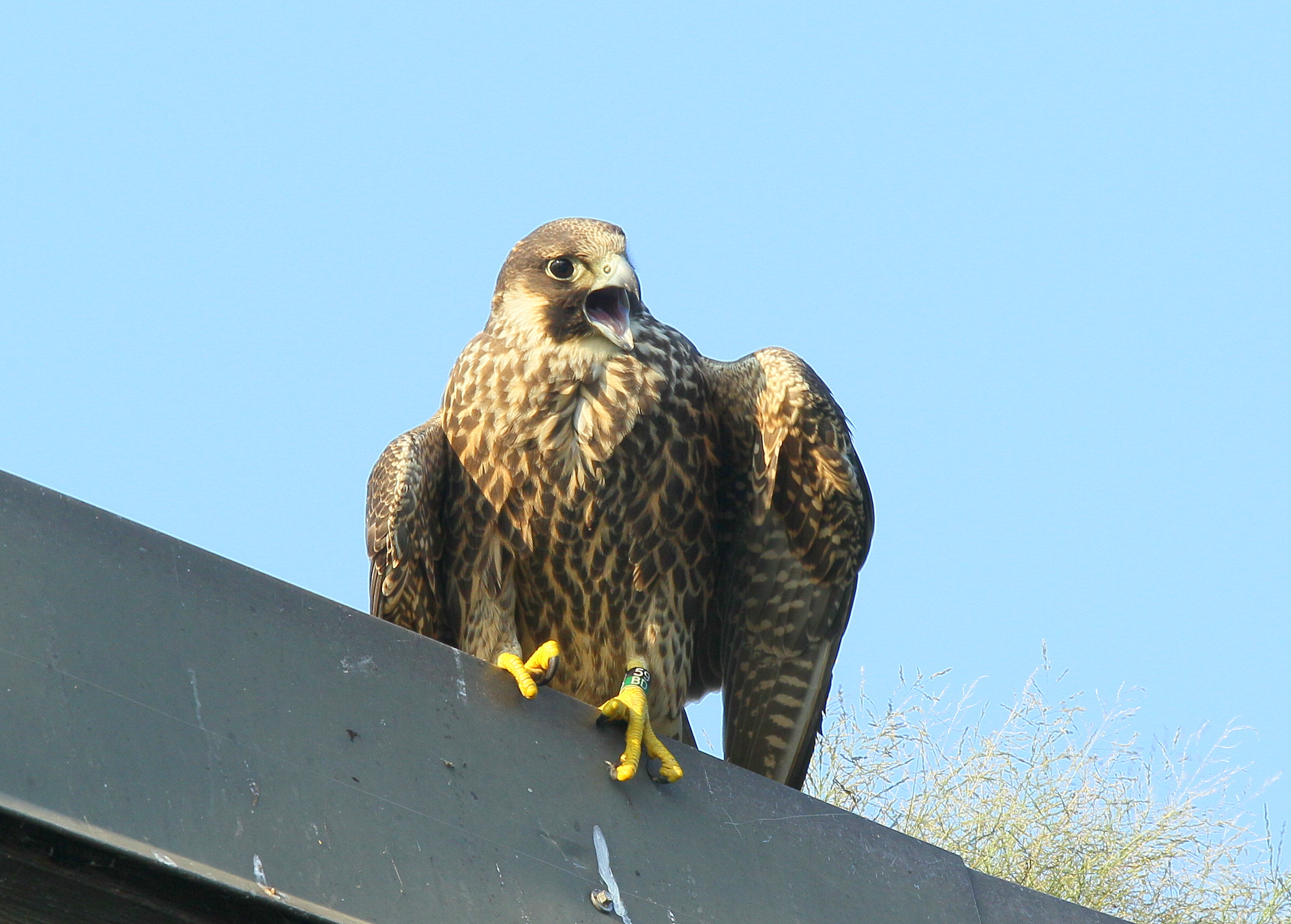
Peregrine Falcon – juvenile with leg bands 59/BD

August 13, 2014 in Near the Clock Tower

On my way home Monday night with my window down while crossing the Merrimack River heading south, a familiar bird call was heard.  It was the whining call of a peregrine.  A juvenile Peregrine was discovered on the south side of a roof overlooking the Merrimack River.  The peregrine was facing the sun and hopping around in an area on the roof with grass.  It seemed to be whining for food.  It moved to the edge of the roof, and thankfully, provided a clear look at the black and green leg bands attached by staff at Mass Wildlife.  This juvenile fledged on June 12 from the Lawrence nest box in the nearby Ayer Mill Clock Tower.  According to the book on peregrine fledglings by Steve Sherrod, most peregrine juveniles disperse on their own once they are proficient at killing prey.  Some individuals disperse before others, and a few are reluctant to disperse unless food is completely withheld by parents.

Peregrine Falcon female near nest box

May 20, 2014 in Near the Clock Tower

The female peregrine has been spending more time out of the nest box and in a variety of perch locations in proximity of the nest box.  Among her favorite perch locations is atop a nearby utility pole on Merrimack Street just west of the intersection of Union St.

8 photos:  http://www.pbase.com/birdshots/image/155830746

Peregrine Falcons 4 eggs close to hatching!

April 26, 2014 in Near the Clock Tower

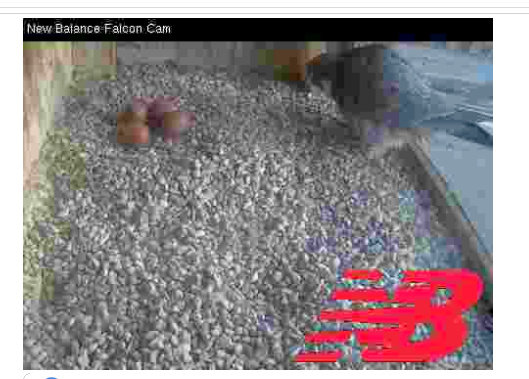
The Peregrines have been incubating the 4 eggs hatched during the 3rd and 4th week of March.  The estimated incubation period runs normally between 29-33 days.  As of Friday afternoon, at the 30 day mark, all 4 eggs were seen and documented with this photograph.  These eggs are ready to hatch and hatching should take place today or next few days!  Stay tuned!

Peregrine Falcon – male stays close to nest box!

March 29, 2014 in Near the Clock Tower

The female has now laid her fourth, and likely penultimate, or final egg.  The pair stays close to the nest box with the female performing over 2/3’s of the incubating duties.  The male is seen nearby the nest and frequently does a flyby on any nearby intruders to let others know that they are not the least bit welcome in the air space around the Clock Tower!  This image shows the male after making numerous aerial loops preparing to land atop the ball at the peak of the weathervane.

Peregrine male hanging out near the nest

March 26, 2014 in Near the Clock Tower

The amount of incubating the male does depends on the couple’s preference.  Some males share more incubation duties than others.  In the middle of the incubation period, the male is on the eggs 30-50% of the daytime hours.  Towards the end of incubation when the eggs are about to hatch, the female spends most of the time on the nest.  She wants to be there to assist the chicks as they break out of their shells.

So which parent is on the eggs right now?  If it’s the middle of the night, it’s the female.  Otherwise, you’ll have to watch closely at “shift change” to see which bird is larger!